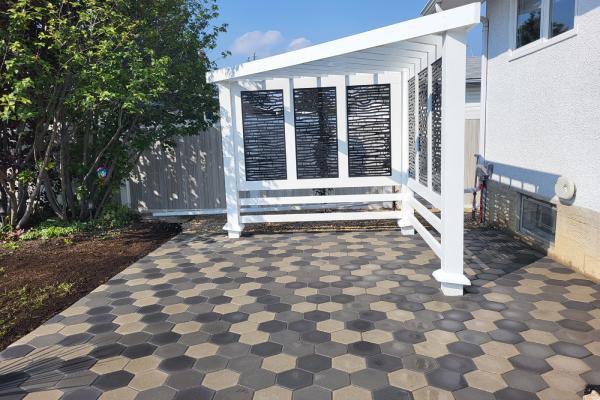
Choosing between interlocking pavers and poured concrete is one of the most common decisions Edmonton homeowners face when planning a new driveway, patio, or walkway.
At first glance, both materials can look durable and attractive. In Edmonton’s climate dealing with lots of snow and rapid spring melting can be intense. Which will put hardscaping materials to the test.
So which option actually lasts longer in Edmonton?
The answer depends on installation quality, drainage planning, maintenance expectations, and how well the material adapts to movement in the soil. Understanding the differences can help you invest in a surface that performs well for years, not just the first season.
Climate Considerations in Edmonton: Why Installation Matters Most
Edmonton’s soil expands and contracts dramatically throughout the year. When moisture seeps beneath a hard surface and freezes, it expands. When it thaws, the ground settles again. This constant movement is what causes cracking, shifting, and sinking.
Before choosing materials, proper landscaping design is critical. A professionally designed layout ensures:
- Correct slope away from the foundation
- Proper drainage planning
- Stable base preparation
- Long term structural integrity
Without thoughtful planning, even the strongest material can fail prematurely. The real question isn’t just “pavers or concrete?” it’s whether the installation accounts for Alberta’s climate.
Interlocking Pavers: Flexible and Repairable
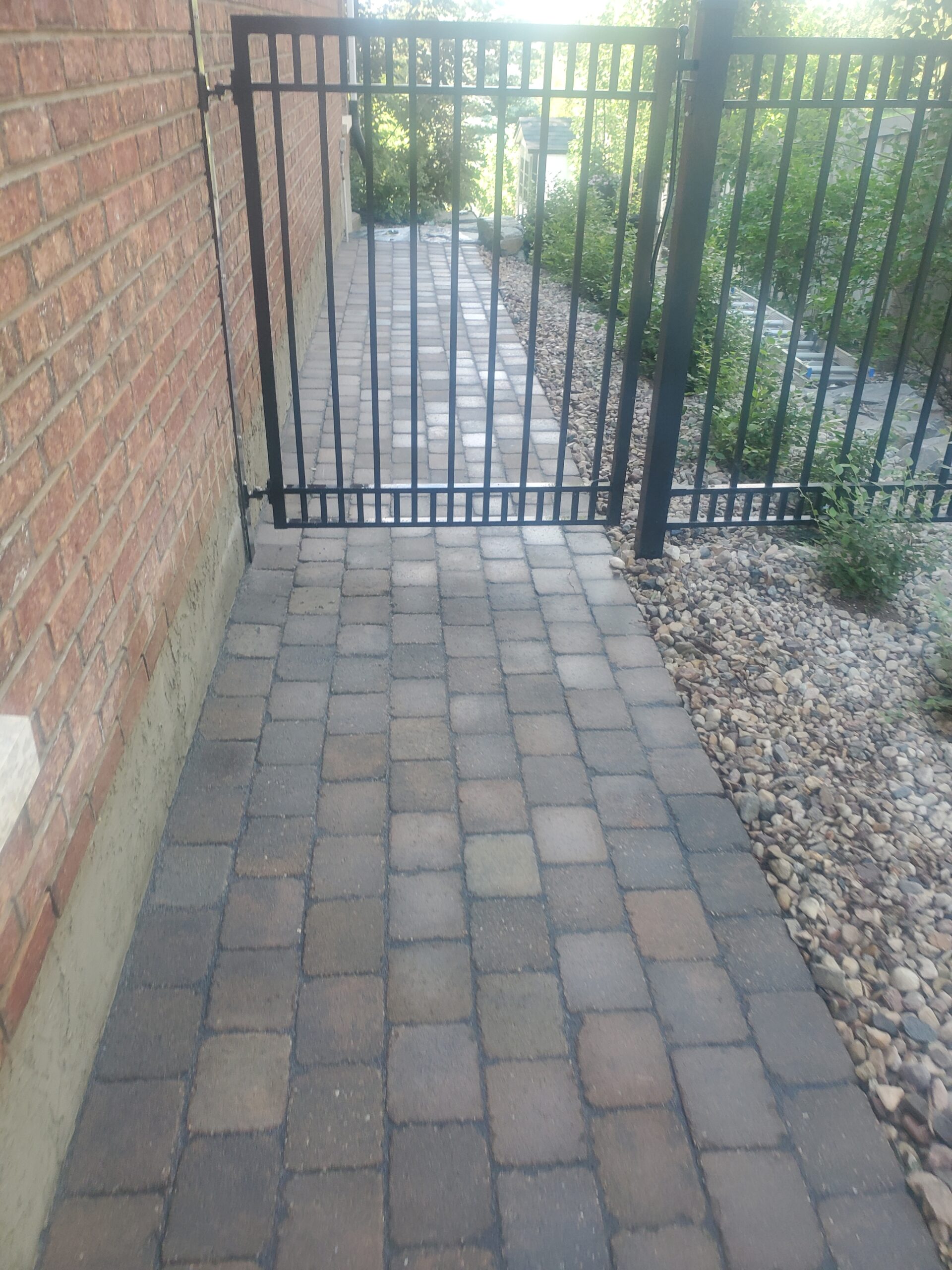
Interlocking pavers are individual units installed over a compacted gravel base. Because they are not one solid slab, they can shift slightly with soil movement without cracking.
Advantages of interlocking pavers in Edmonton:
- Flexibility during freeze and thaw cycles
- Easier spot repairs
- Wide range of colors and patterns
- Strong drainage control when installed correctly
If a section settles or shifts, individual stones can be lifted and reset rather than replacing the entire surface. This makes future adjustments simpler.
Professionally installed patio construction using interlocking pavers often performs well long term because the layered base system allows water to drain beneath the surface instead of becoming trapped.
However, the base preparation must be done properly. Without adequate compaction, even pavers can sink over time.

Poured Concrete: Clean Appearance but Less Flexibility
Poured concrete offers a smooth, modern look and is often perceived as lower cost initially. It creates a solid slab that can handle heavy loads.
Advantages of poured concrete:
- Clean, uniform appearance
- Strong compressive strength
- Lower upfront installation cost
- Minimal joint lines
However, concrete is rigid. When soil shifts beneath it, the slab can crack. In Edmonton’s freeze and thaw conditions, small cracks can widen each year as water enters and expands.
For homeowners considering driveway or walkway construction, it’s important to weigh long term repair costs. Unlike pavers, cracked concrete cannot be spot repaired seamlessly. Repairs often remain visible.
Concrete can last many years if installed properly but still can structurally begin to crack over time. Replacement is often the solution for homeowners in order to tackle this structural challenge.
Drainage Performance: Which Handles Water Better?
Drainage plays a major role in longevity.
Interlocking pavers allow water to move between joints and into the base layers below. When properly built, this reduces surface pooling and hydrostatic pressure.
Concrete surfaces rely entirely on surface slope for drainage. If the slope is insufficient or soil settles, water may pool, increasing the risk of cracking during winter freezes.
Poor drainage around hardscapes can also impact nearby structures. In some cases, improper runoff may contribute to soil erosion or foundation stress, eventually requiring yard restoration to correct grading and stabilize surrounding areas.
When it comes to water management in Edmonton, flexibility and drainage integration often give pavers an advantage.
Maintenance and Lasting Durability
Both materials require maintenance, but the type of maintenance differs.
Interlocking pavers may require:
- Occasional joint sand replacement
- Weed control between joints
- Periodic leveling adjustments
Concrete may require:
- Crack sealing
- Surface patching
- Full slab replacement if severely damaged
From a longevity standpoint, interlocking systems often outlast concrete in climates with aggressive freeze and thaw cycles because they can be repaired in sections.
For homeowners interested in low maintenance yards, pavers can integrate well with gravel beds, structured planting areas, and reduced turf spaces, creating a front or backyard that is easier to manage overall.
Maintenance expectations should factor into your decision as much as appearance.
Aesthetic Flexibility and Design Options
When it comes to customization, interlocking pavers offer more versatility.
They come in multiple:
- Shapes
- Textures
- Patterns
- Color blends
This makes them ideal for homeowners seeking a custom look that complements the architecture of their home.
Concrete can also be stamped or stained, but repairs may not match perfectly over time.
Incorporating either material into a broader plan that includes thoughtful plant selection and planting enhances curb appeal. Layered greenery softens hard edges and creates contrast against stone or concrete surfaces.
When aesthetics matter as much as durability, pavers typically provide greater design flexibility.
Structural Applications: Slopes and Retaining Support
In properties with elevation changes, hardscape materials must work alongside structural elements.
For sloped yards, properly built retaining wall construction may be necessary to stabilize soil and manage water flow before installing either pavers or concrete.
Pavers tend to integrate seamlessly with retaining walls because both systems use segmented construction methods. This allows for better adaptation to grade changes and natural movement.
Concrete can also be used in sloped environments but may be more susceptible to cracking if underlying soil shifts unevenly.
When elevation is involved, structural planning often matters more than material choice.
Lighting Integration and Surface Performance
Hardscape surfaces are often enhanced with integrated lighting.
Whether installing driveway borders or pathway accents, properly planned outdoor lights improve visibility during Edmonton’s long winter evenings. Lighting also highlights texture differences between pavers and concrete.
Pavers often provide easier integration for embedded lighting because individual units can be adjusted around fixtures.
Concrete requires cutting or pre-planning fixture placement before pouring.
While lighting does not determine structural longevity it can however affect usability and safety, especially during icy conditions.
So, What Lasts Longer in Edmonton?
In Alberta’s climate, interlocking pavers often have the edge in long term durability because:
- They flex with soil movement
- They are easier to repair
- They manage drainage more effectively
- They integrate well with structural landscaping features
However, longevity depends heavily on proper installation. Poor base preparation will cause failure regardless of material.
Concrete can last decades when installed correctly on stable soil with proper drainage. But once cracking begins, repair options are limited compared to pavers.
Ultimately, the lasting solution is the one that accounts for grading, drainage, soil type, and structural support from the start.
Making the Right Choice for Your Property
When deciding between interlocking pavers and poured concrete in Edmonton, consider:
- Climate durability
- Drainage performance
- Repair flexibility
- Aesthetic preferences
- Long term maintenance expectations
- Property elevation and soil stability
A professional assessment can determine which material best suits your specific yard conditions and lasting goals.
Whether you’re upgrading a driveway, patio, or walkway, choosing the right installation method today can prevent costly repairs in the future.
In Edmonton’s demanding climate, durability isn’t just about material strength. It is critical for homeowners to plan a proper base construction by designing it with freezing and thawing movements in mind.
If you’re considering a new hardscape installation this spring, evaluating both professional landscape designs options carefully will ensure your investment lasts for years to come.