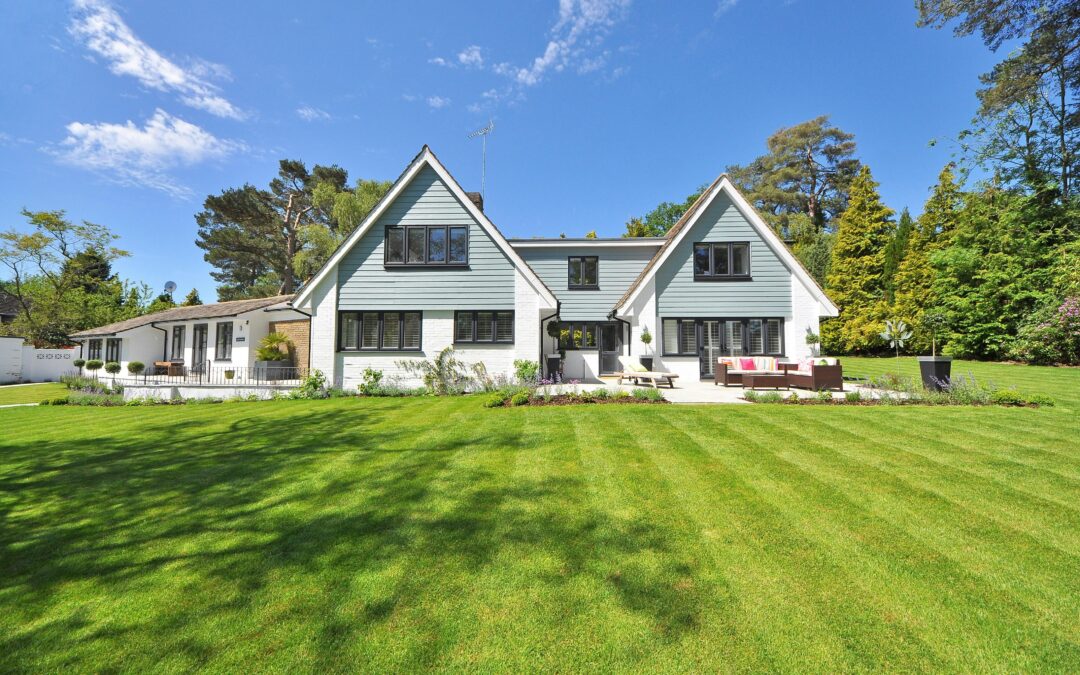
Many homeowners know they want to improve their yard, but aren’t always sure what a full restoration project actually involves. In some cases, people imagine a simple cleanup or a few cosmetic upgrades, only to realize the space has deeper issues affecting both appearance and function.
A proper yard restoration goes beyond surface-level improvements. It rebuilds the outdoor space in a way that improves usability, durability, drainage, and long-term appearance all at once.
Depending on the condition of the property, a restoration project can involve everything from removing old materials to completely redesigning how the yard functions. Here’s what is commonly included in a full yard restoration project.
Removing Existing Landscaping and Materials
The first step in many restoration projects is removing parts of the existing yard that are no longer functioning properly.
This can include:
- Old patios or walkways
- Worn retaining walls
- Damaged sod or planting areas
- Outdated landscaping features
- Failing hardscaping materials
Over time, surfaces settle, layouts become outdated, and previous repairs may start stacking on top of one another. Rather than continuing to work around aging materials, restoration allows the yard to start fresh with a more stable foundation.
In some cases, homeowners choose to preserve certain features, but many projects involve removing large portions of the existing yard to properly address the underlying issues.
Correcting Grading and Drainage Problems
One of the most important parts of a restoration project happens underneath the visible surface.
Many Edmonton properties develop grading and drainage problems over time due to:
- Soil settling
- Freeze–thaw cycles
- Poor original construction
- Water runoff patterns
These problems often lead to standing water, muddy areas, erosion, or unstable surfaces throughout the yard.
During a yard restoration project, the grading of the property is evaluated and adjusted so water flows away from important areas instead of collecting where it shouldn’t. Addressing these issues early is critical because drainage problems tend to affect every other part of the landscape if left unresolved.
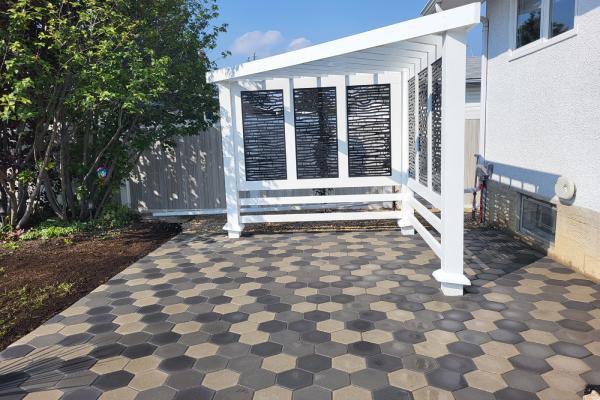
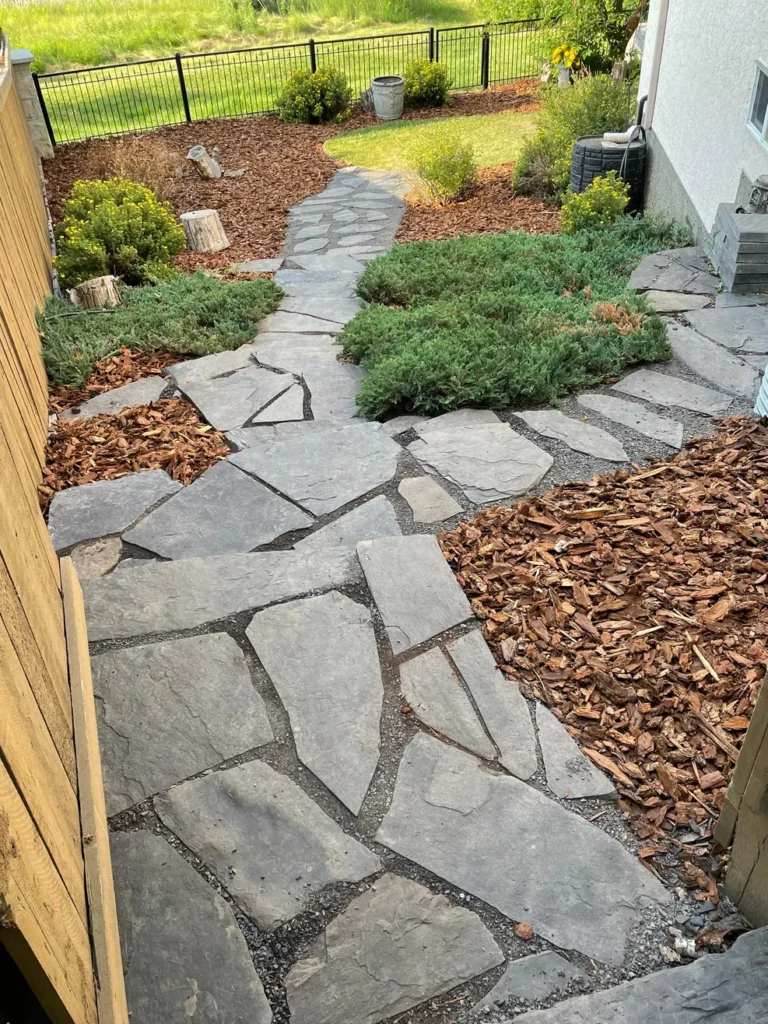
Rebuilding Patios, Walkways, and Hardscaping
Once the groundwork is corrected, hardscaping features can be rebuilt properly.
This may include:
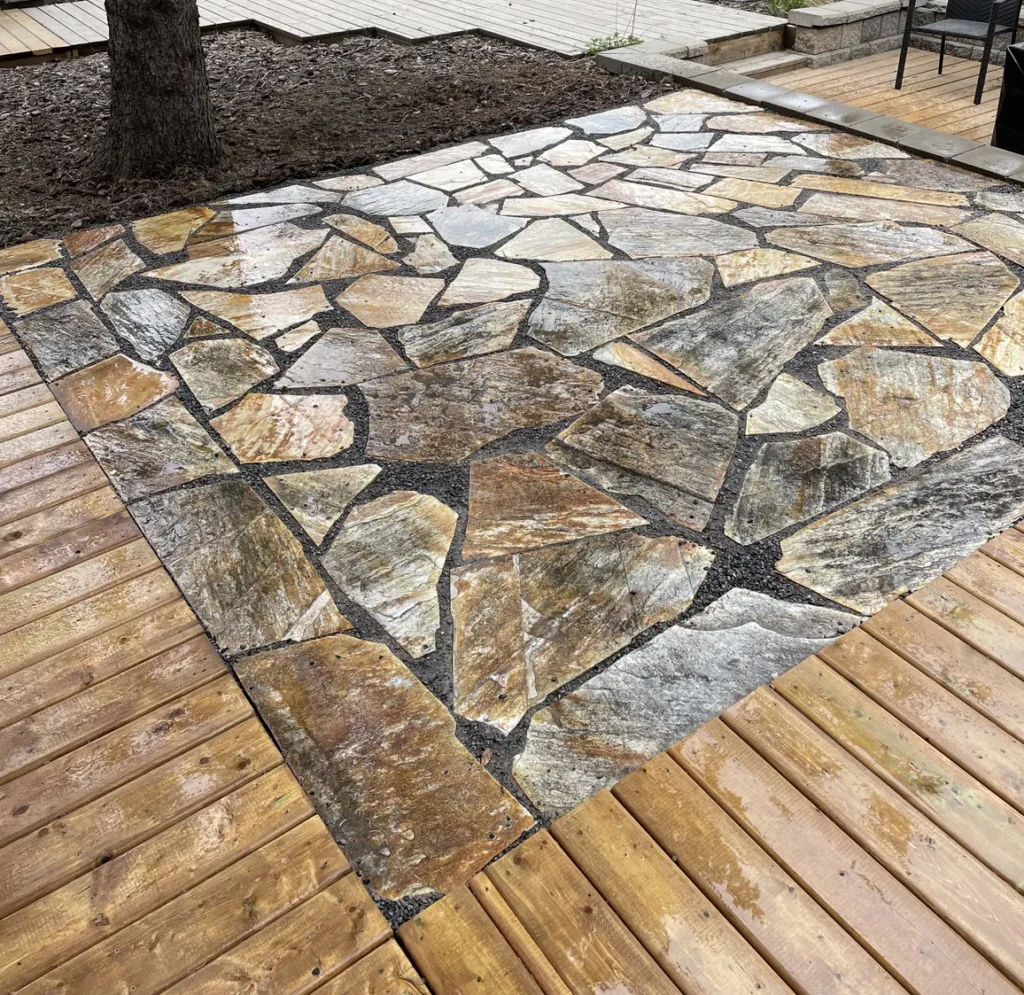
- New patios
- Walkways and pathways
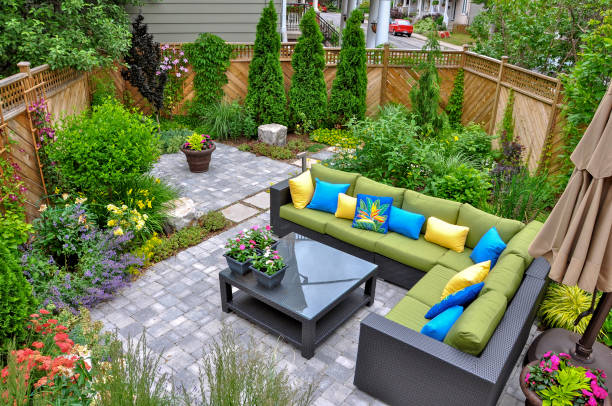
- Seating areas
- Steps and transitions
- Structural landscaping features
One of the biggest advantages of a full restoration is that these elements can all be planned together instead of added individually over time. This creates a more cohesive layout and improves how the yard functions overall.
Proper base preparation is especially important in Edmonton’s climate, where seasonal movement can quickly affect poorly installed surfaces.
Creating a More Functional Layout
Many older yards were never truly designed around how the homeowner uses the space.
Over time, people often realize:
- There isn’t enough entertaining space
- Certain areas go unused
- Traffic flow feels awkward
- The layout feels disconnected
A restoration project creates the opportunity to rethink the entire property layout and improve how the yard works day to day.
This could involve:
- Expanding patio areas
- Creating better transitions between spaces
- Defining seating or gathering areas
- Improving accessibility and movement through the yard
In many cases, the functional improvements become just as valuable as the visual upgrades themselves.

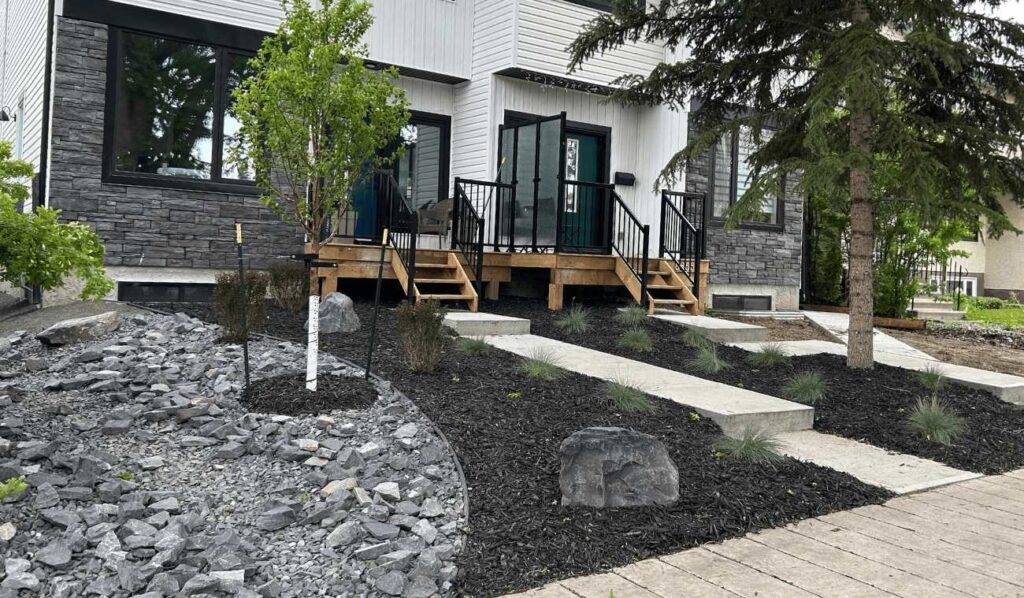
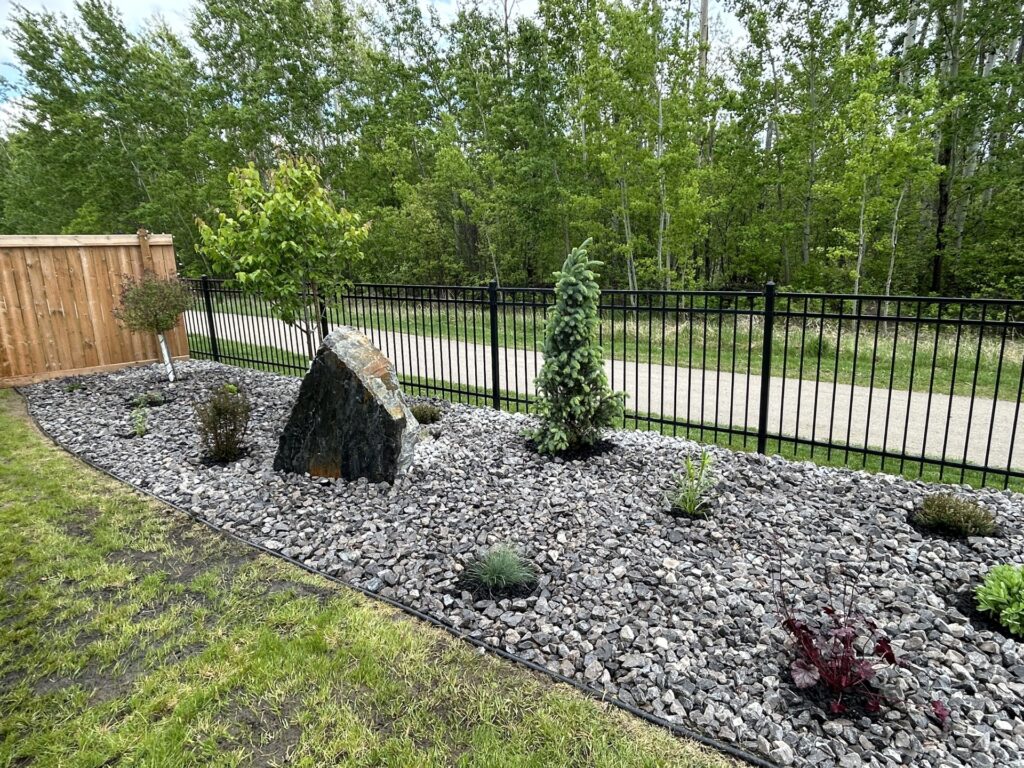
Updating Planting and Softscaping
Older planting beds often become overgrown, difficult to maintain, or visually outdated.
A restoration project may include:
- Removing unhealthy or overgrown plants
- Installing new planting layouts
- Refreshing mulch or decorative rock
- Simplifying high-maintenance areas
The goal is usually to create planting areas that complement the hardscaping while remaining manageable long-term.
Many homeowners today prefer cleaner, lower-maintenance planting designs that still soften the space visually without requiring constant upkeep.
Repairing or Adding Structural Elements
Some yards also require structural improvements as part of the restoration process.
This can include:
- Retaining walls
- Raised planting beds
- Steps and grade transitions
- Border edging and containment
These features not only improve appearance but also help stabilize the yard and define different areas more clearly.
Structural elements are especially important in sloped yards or properties experiencing erosion or uneven settling.
Improving Long-Term Durability
One of the biggest goals of a full restoration is improving the long-term performance of the yard.
Rather than continuing to patch recurring issues, the space is rebuilt in a way that addresses:
- Drainage concerns
- Surface movement
- Layout inefficiencies
- Aging materials
This often results in a yard that requires less ongoing maintenance and fewer future repairs.
In Edmonton’s climate, durability matters just as much as appearance. A properly restored yard should continue functioning well through years of seasonal weather changes.
Customizing the Space Around Your Lifestyle
No two restoration projects are exactly the same because every homeowner uses their outdoor space differently.
Some people prioritize:
- Entertaining and seating space
- Lower maintenance requirements
- Open lawn areas for children or pets
- More modern landscaping aesthetics
A restoration project allows the yard to be redesigned around the homeowner’s current goals instead of trying to work within the limitations of an outdated layout.
A Full Restoration Creates a Fresh Start
For many homeowners, a yard restoration becomes the opportunity to finally solve multiple long-standing issues at once.
Instead of continuing to repair:
- uneven surfaces
- drainage problems
- outdated landscaping
- underused spaces
…the property can be rebuilt with a clear long-term plan in mind.
If your yard no longer functions the way you want it to, a full yard restoration can completely transform both the appearance and usability of the space.
And if you’d like help planning your project, you can always reach out to our team to discuss your yard and goals in more detail.