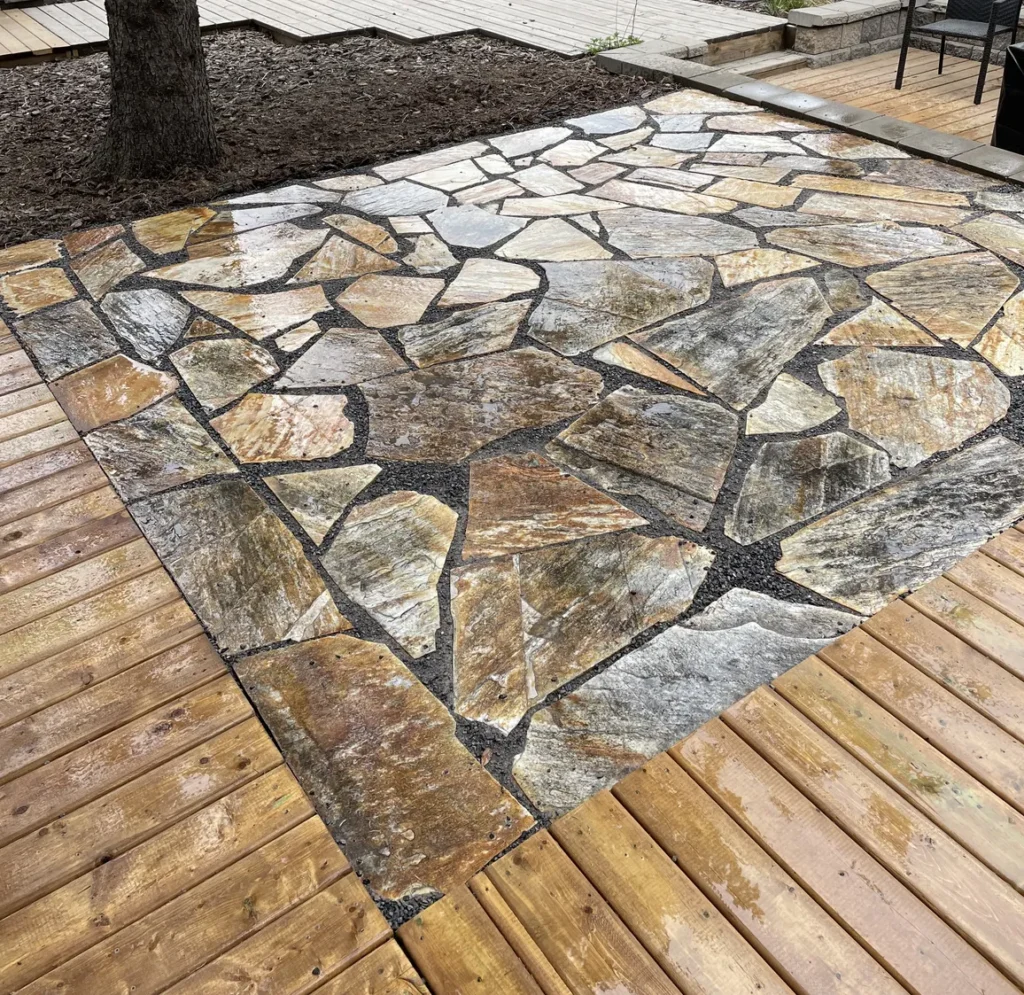
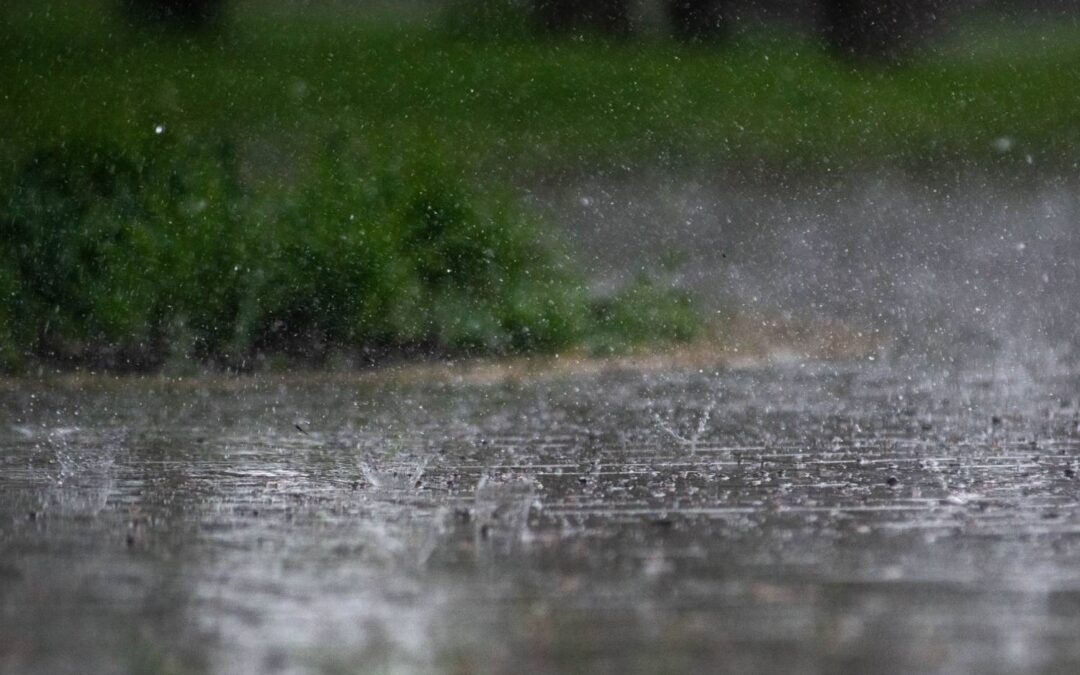
The summer of 2026 shattered weather records across Edmonton. With over 580 millimetres of rainfall soaking the region between June and August, the city surpassed its previous 1953 rainfall record by a massive margin.
From flooded streets on Yellowhead Trail to $42 million in uninsurable municipal infrastructure damage, severe weather created unprecedented challenges across the city. Local construction sites ground to a halt, flash flooding popped manhole covers out of street pavement, and municipal crews responded to over 1,400 storm-related emergencies.
While city leaders work to manage public infrastructure, residential property owners face their own set of challenges. Homeowners across Edmonton experienced saturated soil, washed-out garden beds, pooling basements, and shifting patios.
As severe storm events become more frequent, relying on basic lawn care is no longer enough. Here is how heavy rainfall impacts residential properties and what you can do to protect your landscape against future severe weather.
The Hidden Impact of Severe Rain on Private Properties
When an extraordinary amount of water hits saturated ground, the damage extends well beyond visible puddles. Heavy, continuous rainfall creates structural pressure underground that can ruin a yard long after the storm clouds clear.
| Damage Type | Underlying Cause | Long-Term Impact on Your Yard |
| Soil Saturated Instability | Excess water trapped in dense Edmonton clay | Patios sink, paver walkways shift, and foundations move |
| Severe Soil Erosion | Rapid surface runoff from heavy downpours | Exposed plant roots, rutted lawns, and washed-out beds |
| Hydrostatic Pressure Build-Up | Water pooling behind sloped gardens or walls | Retaining walls lean, bulge, or suffer structural failure |
| Subsurface Water Pooling | Inadequate grading or poor drainage paths | Foundation leaks, basement flooding, and root rot |
Why Edmonton Soils Struggles with Extreme Wet Weather
Edmonton’s natural soil composition consists largely of heavy clay. Clay soil acts like a sponge, holding onto moisture for extended periods without allowing water to drain naturally into deeper water tables.
During normal summers, clay causes minor issues like standing water after a light storm. During a record-breaking summer where the ground stays continuously saturated, clay soil expands dramatically.
When saturated clay expands, it exerts lateral pressure against retaining walls, foundation walls, and concrete bases. Once the soil eventually dries out, it shrinks and contracts. This endless expansion and contraction cycle causes paver stones to unlevel, retaining walls to tilt, and garden slopes to slip.
Four Exterior Design Strategies to Flood-Proof Your Property
Protecting your home against heavy rain requires strategic hardscaping, proper grading, and planned drainage paths. Implementing these solutions gives rising rainwater a controlled path out of your yard.
1. Re-Grading Away from Foundations
Proper property grading is your home’s first line of defense. The ground immediately surrounding your home should slope away from foundation walls at a minimum slope of two to three inches for every ten feet. If heavy rain causes water to pool within five feet of your home, re-grading the site is critical to prevent water from penetrating foundation cracks.
2. Installing Retaining Walls with Integrated Drainage
Sloped properties suffer the worst damage during heavy downpours. A properly engineered retaining wall holds back shifting soil while relieving water pressure through subterranean drainage systems.
Key retaining wall drainage components include:
- Crushed Aggregate Backfill: Clean gravel behind the wall lets water flow down freely instead of building pressure against blocks.
- Perforated Drain Pipe (Weeping Tile): Placed at the base of the wall to collect trapped water and route it away safely.
- Filter Fabric: Prevents fine clay particles from clogging crushed aggregate over time.
To see how structural walls solve sloped yard problems, explore our dedicated service page for retaining wall construction in Edmonton.
3. Dry Creek Beds & Surface Swales
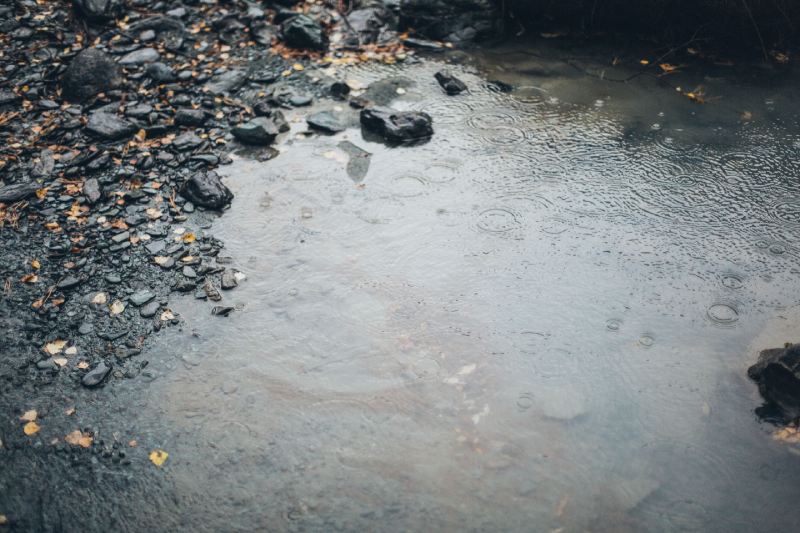
A dry creek bed is an attractive landscape feature constructed with river stone and rounded cobble. During quiet weather, it acts as an appealing rock garden path. During severe rainstorms, it functions as a high-capacity drainage channel, carrying heavy runoff away from patios and toward municipal storm drains without washing away soil or mulch.
4. Permeable Sub-Bases for Walkways & Patios
Traditional poured concrete surfaces force water to run off quickly into surrounding soil, creating concentrated erosion spots. Installing paver walkways or patios over deep, open-graded aggregate bases allows rainwater to filter naturally down through the joints, reducing surface runoff.
If your existing hardscaping shifted or suffered water damage during recent weather events, review our options for walkway construction in Edmonton or full yard restoration in Edmonton.
Preparing Your Yard for the Next Severe Weather Season
Local weather trends indicate that extreme rainfall events are becoming more common. Taking proactive steps now protects your property investment and prevents expensive emergency repairs down the road.
| Project Scope | Primary Focus Area | Ideal Solution |
| Minor Water Pooling | Saturated garden beds & downspouts | River rock drainage channels & rain garden planting |
| Moderate Slope Movement | Soil washing onto patios or paths | Low timber or block retaining walls with gravel backfill |
| Severe Property Flooding | Water moving toward home foundation | Full site re-grading, deep sub-drainage, & retaining walls |
Protect Your Landscape with Lush Landscaping
Whether you noticed new soil erosion, standing water near your house, or a retaining wall beginning to lean after recent storms, structural landscape fixes require professional evaluation.
At Lush Landscaping, we specialize in designing and building climate-resilient landscapes tailored specifically to Edmonton soils and extreme weather.
Ready to protect your property against future storms?
- Explore Our Work: See how we transform challenging local properties in our Lush Landscaping Gallery.
- Schedule a Site Consultation: Visit our Contact Page or explore our full suite of services on our main Edmonton Landscaping Services page to get started.