Not every sloped yard needs a retaining wall. In the right situation, however, a retaining wall can solve problems that go far beyond appearance.
Retaining walls are used to hold soil in place, manage elevation changes, reduce erosion, and create more functional areas on properties that aren’t naturally level. They can also become an important part of a larger landscaping plan, particularly when patios, walkways, gardens, or drainage improvements are involved.
For Edmonton homeowners, these issues can become especially noticeable after spring snowmelt, heavy rain, or repeated freeze-thaw cycles.
So how do you know when a retaining wall might be the right solution?
Here are seven signs to watch for around your property.
1. Soil Is Washing Away
Visible erosion is one of the clearest signs that a slope may need additional support.
You might notice soil gradually disappearing from a garden bed, collecting at the bottom of a hill, washing onto a walkway, or exposing roots that were previously covered.
A small amount of soil movement may not seem serious at first. Over time, however, repeated runoff can continue removing material and changing the shape of the landscape.
Common signs of erosion include:
- Exposed plant roots
- Channels forming through soil
- Soil collecting at the bottom of slopes
- Mulch repeatedly washing out of garden beds
- Bare areas where plants struggle to establish
- Sediment collecting on patios or walkways
A properly designed retaining wall can help stabilize a slope and hold soil where it belongs.
The wall may also be combined with planting, grading, or drainage improvements depending on what’s causing the erosion.
2. Your Yard Has a Steep or Difficult Slope
A sloped yard isn’t automatically a problem.
Gentle elevation changes can add character to a landscape and sometimes work beautifully with planting beds, natural stone, or other features.
Steeper slopes can be much harder to use.
Furniture doesn’t sit properly. Lawn areas can be difficult to maintain. Walking across the yard may feel awkward, and landscaping materials can gradually move downhill.
A retaining wall can divide the slope into more manageable levels.
Instead of one continuous hill, the property could potentially have flatter areas for:
- Lawn
- Planting beds
- Patios
- Walkways
- Seating areas
- Garden spaces
This can make previously awkward parts of the yard much more functional.
3. Water Keeps Collecting or Moving Through the Same Area
Drainage problems and retaining walls are closely connected.
If water repeatedly travels down a slope, it can carry soil with it and gradually contribute to erosion.
You may notice:
- Muddy areas after rain
- Channels carved through soil
- Water collecting at the bottom of a slope
- Mulch washing out of beds
- Soil moving toward hardscaped areas
- Excess water near patios or walkways
A retaining wall may be part of the solution, but simply putting up a wall isn’t enough.
Water still needs somewhere to go.
Drainage needs to be considered when the wall is designed so water doesn’t simply collect behind the structure. A retaining wall that holds back soil while ignoring water pressure can eventually develop problems of its own.
That’s why retaining-wall construction should be considered as part of the property’s overall grading and drainage rather than as an isolated feature.
4. Soil Is Moving Toward Your Patio or Walkway
Hardscaped areas and slopes don’t always work well together without some form of separation.
If a patio or walkway sits below a garden bed or sloped portion of the yard, soil and mulch may gradually migrate onto the finished surface.
After heavy rain, you might repeatedly find yourself sweeping dirt or mulch back into the landscape.
A retaining wall can create a defined structural edge between the two elevations.
This does more than keep the patio cleaner.
It can also create a more intentional landscape design by separating different areas and making the elevation change look like a planned feature rather than a problem the yard happens to have.
For example, a retaining wall beside a patio could create an elevated planting bed while helping hold the surrounding soil in place.
5. Your Existing Retaining Wall Is Leaning, Cracking, or Shifting
Sometimes the question isn’t whether you need a retaining wall.
You already have one, but it’s showing signs of failure.
Watch for:
- Leaning or bulging sections
- Separation between blocks
- Significant cracking
- Uneven sections
- Blocks shifting out of alignment
- Soil escaping through or around the wall
- Areas that appear to be sinking
- Water consistently collecting behind the structure
These problems shouldn’t simply be treated as cosmetic.
A retaining wall is holding back soil, and potentially a substantial amount of it. When the wall begins moving, there may be problems with the foundation, drainage, construction, or pressure behind it.
Lush Landscaping provides both new retaining wall construction and renovation services for existing walls, allowing the underlying problem to be evaluated rather than simply trying to hide visible damage.
6. You Want to Create More Usable Space
Retaining walls aren’t only used to correct problems.
Sometimes they’re used to make a property more functional.
Imagine a backyard with a significant slope immediately behind the house.
Technically, you have plenty of square footage. In practice, much of it may be difficult to use.
By incorporating retaining walls into the landscape, portions of that slope may be transformed into flatter areas.
Depending on the property, that could create space for:
- A patio
- Outdoor furniture
- A garden
- A play area
- Lawn
- Walkways
- Planting beds
This can be particularly valuable when you’re planning a larger backyard renovation.
Rather than treating the slope as wasted space, the landscape can be designed around the elevation change.
7. You’re Planning Major Changes to Your Yard’s Grading
Sometimes a retaining wall becomes necessary because of what you want to build.
A new patio, walkway, garden, or other landscape feature may require changing the existing elevation.
For example, you may want a level patio in an area where the ground naturally slopes.
Creating that flat surface means dealing with the difference between the new patio elevation and the surrounding yard.
A retaining wall can provide the transition.
This is why grading should be considered early when planning a landscaping project.
Patios, walkways, walls, planting beds, and drainage systems all affect one another. Designing them together can help prevent a situation where one new feature creates a problem somewhere else.
What Does a Retaining Wall Actually Do?
At its simplest, a retaining wall holds soil back when two areas of a property sit at different elevations.
But a well-planned wall can serve several purposes at once.
It can:
- Stabilize soil
- Help manage slopes
- Reduce erosion
- Create usable level areas
- Define planting beds
- Separate landscape zones
- Support patios and walkways
- Add structure to the overall design
This combination of function and appearance is what makes retaining walls useful in landscape design.
They solve a structural problem while also becoming a visible feature of the yard.
Retaining Walls and Drainage Need to Work Together
One of the most important things to understand about retaining walls is that soil isn’t the only thing pushing against them.
Water matters too.
When water accumulates in the soil behind a wall, it creates additional pressure against the structure.
A wall therefore needs to be designed with drainage in mind.
Depending on the project, that may involve drainage aggregate, drainage pipe, proper backfill, grading, or other methods of allowing water to move away instead of becoming trapped.
The specific solution depends on the property and wall design.
What matters is that drainage isn’t treated as an afterthought.
Why Edmonton’s Climate Matters
Retaining walls in Edmonton need to deal with substantial seasonal changes.
The ground freezes and thaws throughout the year. Spring snowmelt can introduce large amounts of water into the landscape, while summer storms can create additional runoff.
Soil conditions can also affect how water moves through the property.
These conditions make proper preparation particularly important.
A wall may look perfectly straight when it’s first installed, but long-term performance depends on what was done underneath and behind it.
Proper excavation, base preparation, drainage, backfill, and installation all play a role in helping the structure withstand seasonal movement.
Does Every Slope Need a Retaining Wall?
No.
Some slopes can be managed through grading, planting, erosion-resistant groundcover, or other landscaping strategies.
The severity of the slope matters, as does what is located above and below it.
A relatively gentle garden slope may work perfectly well without a wall.
A steeper slope beside a patio may require much more consideration.
Rather than assuming every elevation change needs hardscaping, the property should be evaluated as a whole.
The goal is to use a retaining wall where it provides a genuine structural or functional benefit.
What Type of Retaining Wall Is Best?
The right wall depends on its purpose, height, location, surrounding landscape, and desired appearance.
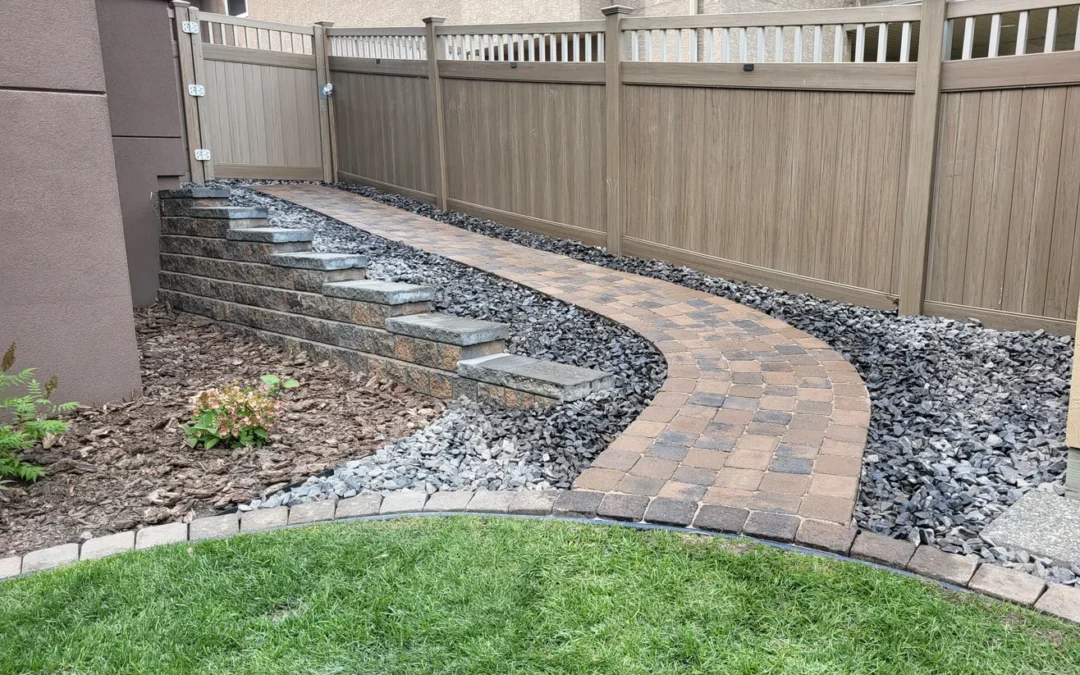
Lush Landscaping works with options including stack stone and block retaining walls, along with custom designs based on the needs of the property.
A wall that borders a formal patio may call for a different appearance than one incorporated into a natural planting area.
Material selection should therefore consider both performance and design.
The finished wall should look like it belongs with nearby patios, walkways, garden beds, and other landscape features.
Can a Retaining Wall Improve the Appearance of a Yard?
Absolutely.
Retaining walls are highly functional, but they can also create structure in a landscape that otherwise feels undefined.
A wall can be used to create:
- Raised planting beds
- Terraced gardens
- Defined patio edges
- Changes between different landscape materials
- Visual separation between outdoor areas
- More interesting changes in elevation
This is especially effective when the wall is incorporated into the overall landscape design from the beginning.
Rather than looking like something that was installed solely to hold back soil, it becomes part of the property’s architecture.
Should You Repair or Replace an Existing Retaining Wall?
That depends on why the wall is failing.
Minor cosmetic issues aren’t the same as significant structural movement.
If a wall is leaning, bulging, separating, or repeatedly shifting, it’s important to determine what’s causing the problem.
Potential issues may involve:
- Poor base preparation
- Inadequate drainage
- Soil pressure
- Settlement
- Improper construction
- Seasonal ground movement
Simply pushing blocks back into place won’t necessarily solve the underlying problem.
An existing wall should be evaluated before deciding whether repair or reconstruction makes more sense.
Plan the Wall Before Building the Rest of the Yard
If you’re planning a larger landscaping project, structural features should generally be considered early.
Imagine installing new planting beds and a walkway only to discover later that a retaining wall is needed in the same area.
Some of that finished work may have to be removed.
Planning the wall early allows patios, paths, planting beds, steps, and drainage to be designed around it.
Even if the entire landscape isn’t completed at once, having a plan can help each phase fit together.
How Do You Know If a Retaining Wall Is the Right Solution?
Start with the problem you’re trying to solve.
Are you dealing with erosion?
Is the slope difficult to use?
Does water repeatedly move soil downhill?
Are you trying to create a level patio or garden?
Is an existing wall beginning to fail?
Once you understand the problem, you can determine whether a wall is the best solution or whether grading, drainage, planting, or another landscaping approach would work better.
A retaining wall should have a clear purpose.
Retaining Wall Construction in Edmonton
Slopes and elevation changes don’t necessarily have to limit what you can do with your property.
The right retaining wall can stabilize soil, reduce erosion, create flatter areas, support other landscape features, and add structure to the overall yard.
Lush Landscaping & Restoration provides retaining wall construction in Edmonton using stack stone, block, and custom designs tailored to the needs of each property. The team also works with homeowners who need to repair or renovate existing retaining walls.
If you’re noticing erosion, shifting soil, drainage problems, or an unstable slope, it’s worth finding out what’s causing the problem before it gets worse. From there, you can determine whether a retaining wall should become part of the solution.