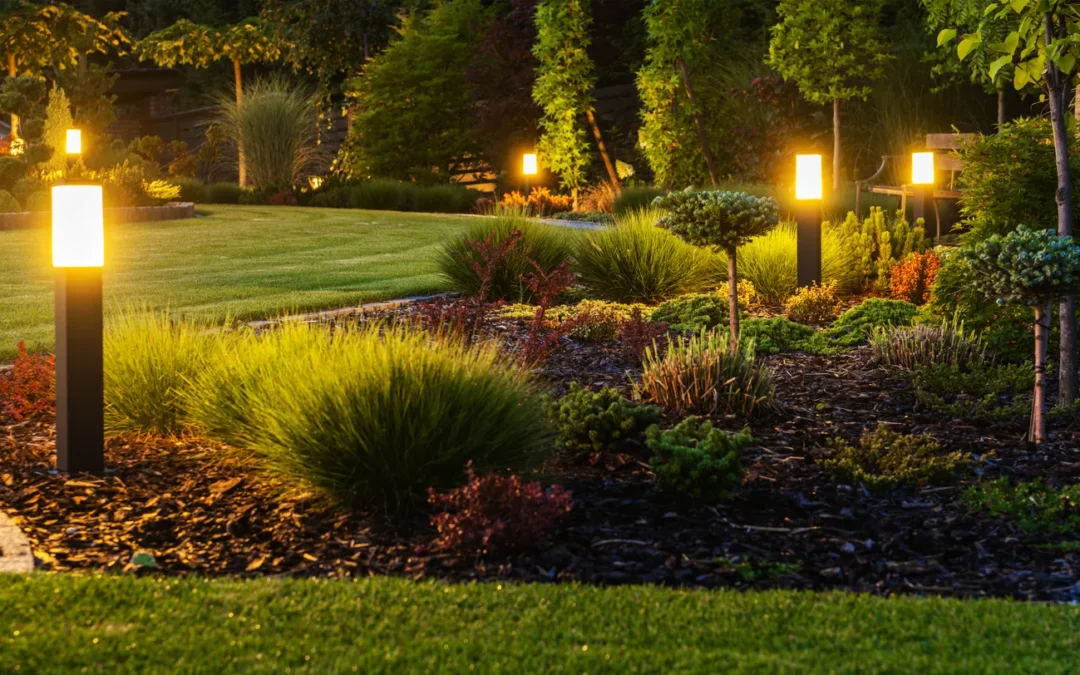
A backyard doesn’t have to become unusable as soon as the sun goes down.
The right landscape lighting can make patios more inviting, improve visibility along walkways and steps, highlight some of the best features of your landscaping, and completely change how the yard feels at night.
Good outdoor lighting isn’t about making your property as bright as possible. In fact, too much light can make a backyard feel harsh and take away from the atmosphere you’re trying to create. The best designs use light selectively, putting it where it improves safety, functionality, or the appearance of the landscape.
If you’re planning your own backyard, here are some landscape lighting ideas that work particularly well for Edmonton homes.
1. Light the Path Through Your Yard
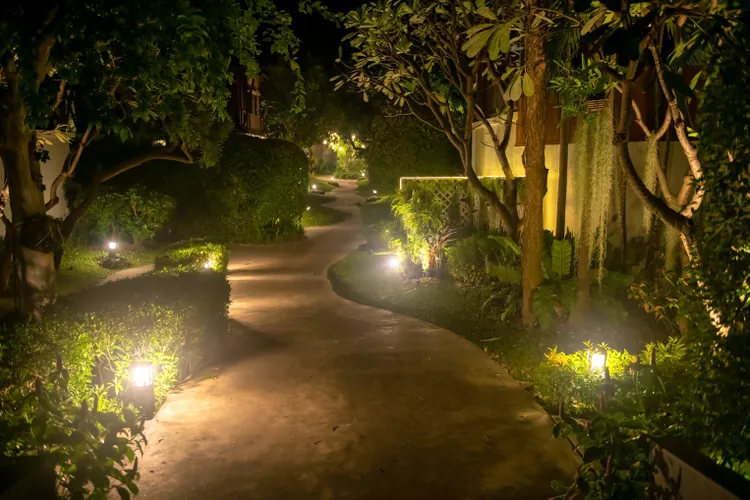
Walkway lighting is one of the most practical places to start.
Paths that are easy to navigate during the day can become difficult to see at night, particularly when they include curves, steps, changes in elevation, or transitions between different materials.
Strategically placed pathway lights can illuminate the route without flooding the entire yard with light.
They work especially well along:
- Front walkways
- Backyard paths
- Garden paths
- Routes between the house and patio
- Side-yard walkways
- Paths leading to sheds or other structures
The fixtures themselves don’t necessarily need to be the focal point.
Well-planned outdoor lighting should help people naturally understand where to walk while still allowing the surrounding landscape to remain the star of the show.
2. Create a More Inviting Patio
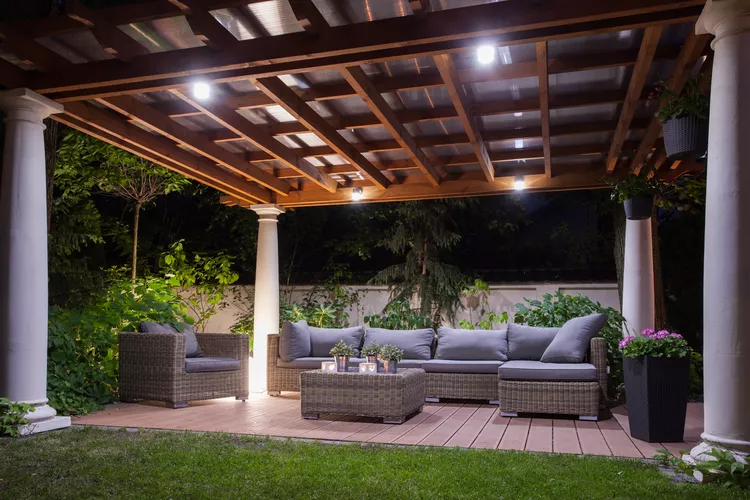
If you’ve invested in a patio, lighting can help you get more use out of it.
Edmonton’s summer evenings are one of the best times to enjoy the backyard. Lighting allows outdoor dinners, conversations, and gatherings to continue well after natural light starts fading.
Instead of relying on one extremely bright fixture attached to the house, consider using several softer sources of light.
Patio lighting might include:
- Lighting around the perimeter
- Lights incorporated into nearby steps
- Accent lighting around planting beds
- Lighting beneath seating walls
- Soft illumination around an outdoor kitchen
- Lights directed toward nearby trees or landscape features
The goal is to create enough visibility to comfortably use the space without making it feel like you’re sitting under a spotlight.
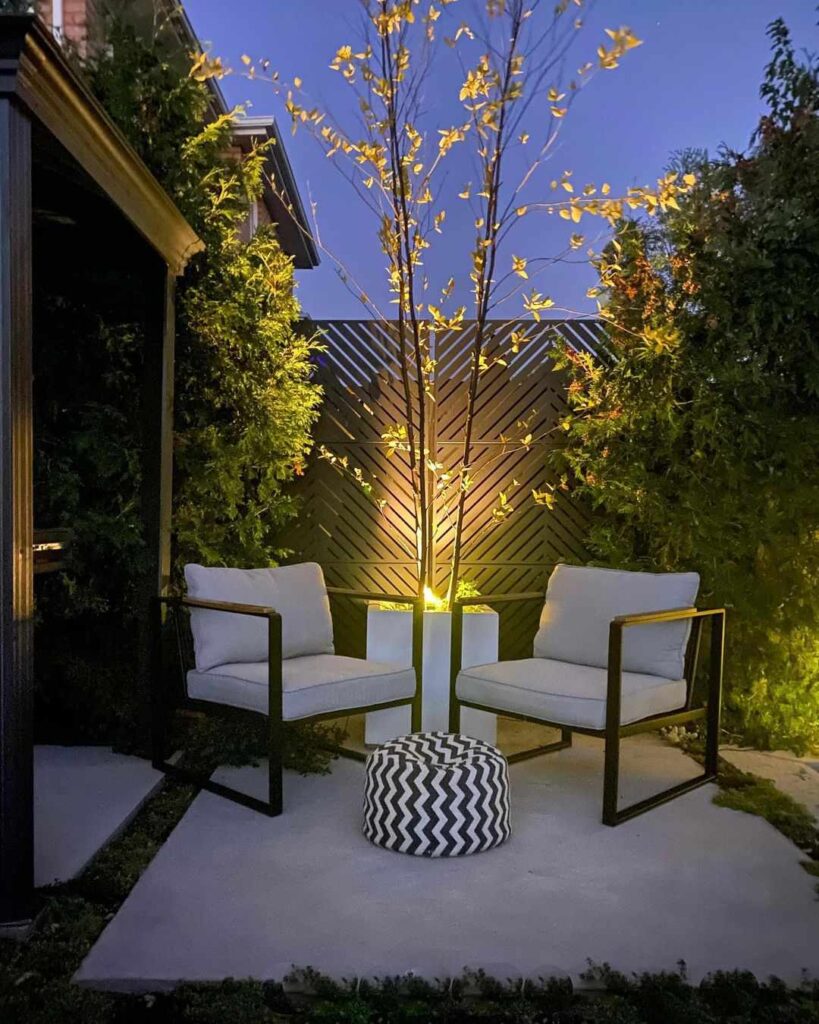
3. Use Uplighting to Highlight Trees
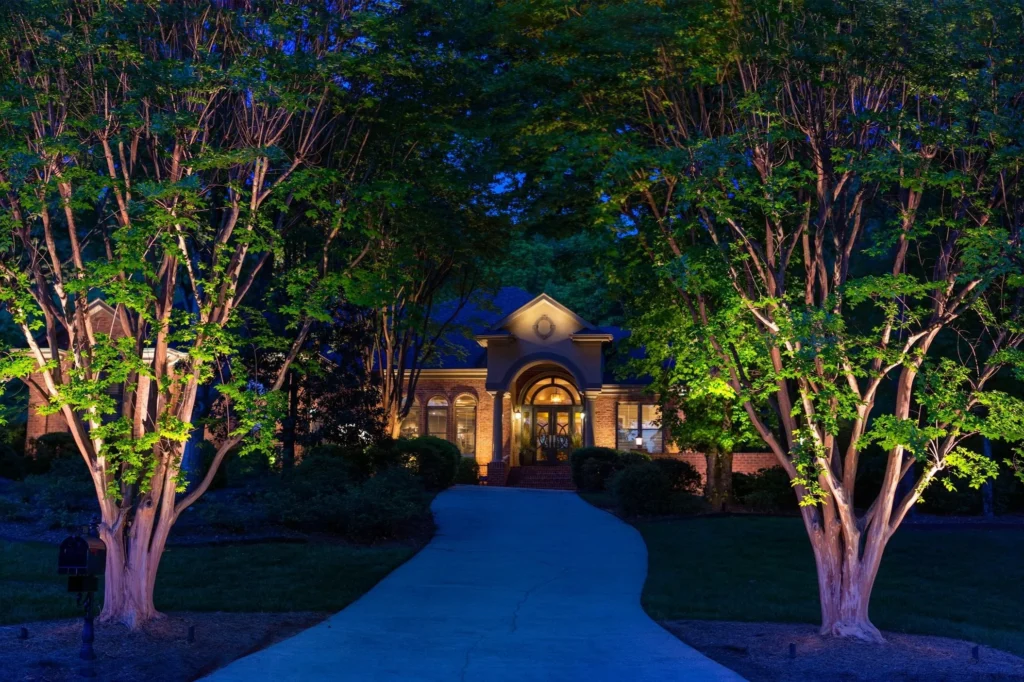
Mature trees can become some of the most dramatic features in a landscape after dark.
Uplighting involves positioning a fixture near ground level and directing the light upward into the trunk and canopy.
During the day, the tree is simply part of the landscape. At night, the lighting reveals its shape, texture, and branching structure in an entirely different way.
This technique can work particularly well with distinctive mature trees or trees positioned near patios and other gathering spaces.
You don’t need to illuminate every tree in the yard.
Choosing one or two strong focal points usually creates a more intentional effect.
4. Highlight Garden Beds
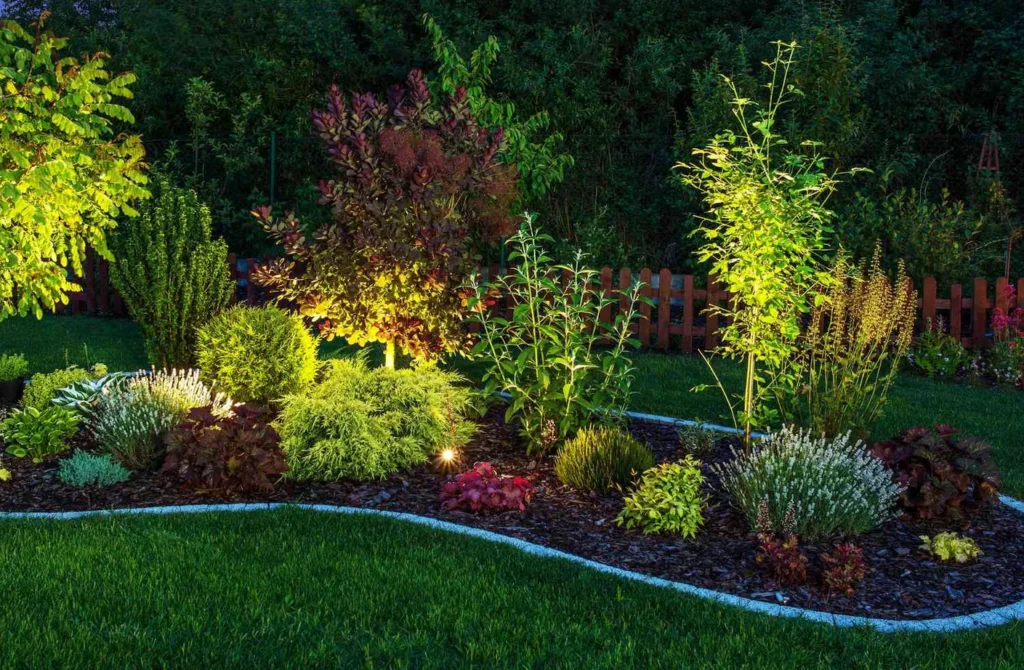
A lot of work goes into selecting plants and creating garden beds, but much of that detail disappears after sunset.
Low-level accent lighting can help bring some of it back.
Rather than illuminating every plant individually, focus on areas with interesting shapes and textures.
You might highlight:
- Ornamental grasses
- Shrubs
- Feature plants
- Large planters
- Decorative boulders
- Layered planting beds
- Small ornamental trees
Lighting from different angles can create shadows and depth, giving the landscape more dimension at night.
A professionally planned landscape lighting design can also account for how plants will grow so fixtures aren’t quickly hidden or overwhelmed as the landscape matures.
5. Add Lighting to Retaining Walls
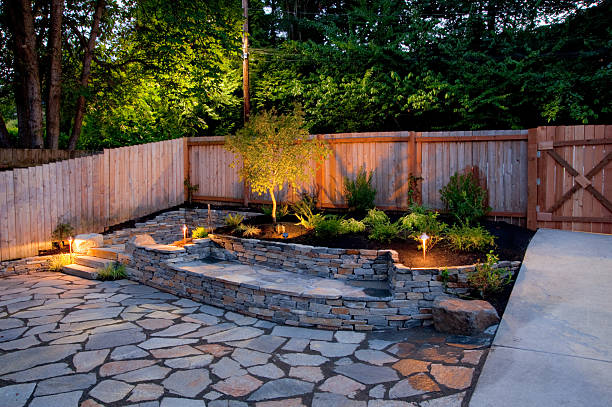
Retaining walls provide a great opportunity to incorporate lighting directly into the hardscape.
Depending on the design, lights can be positioned along or within the wall to softly illuminate the area below it.
This works particularly well when a retaining wall borders:
- A patio
- A walkway
- Steps
- A garden bed
- A change in elevation
Lighting can also emphasize the texture of stone or block after dark.
Instead of viewing the retaining wall as purely structural, lighting allows it to become part of the nighttime landscape design.
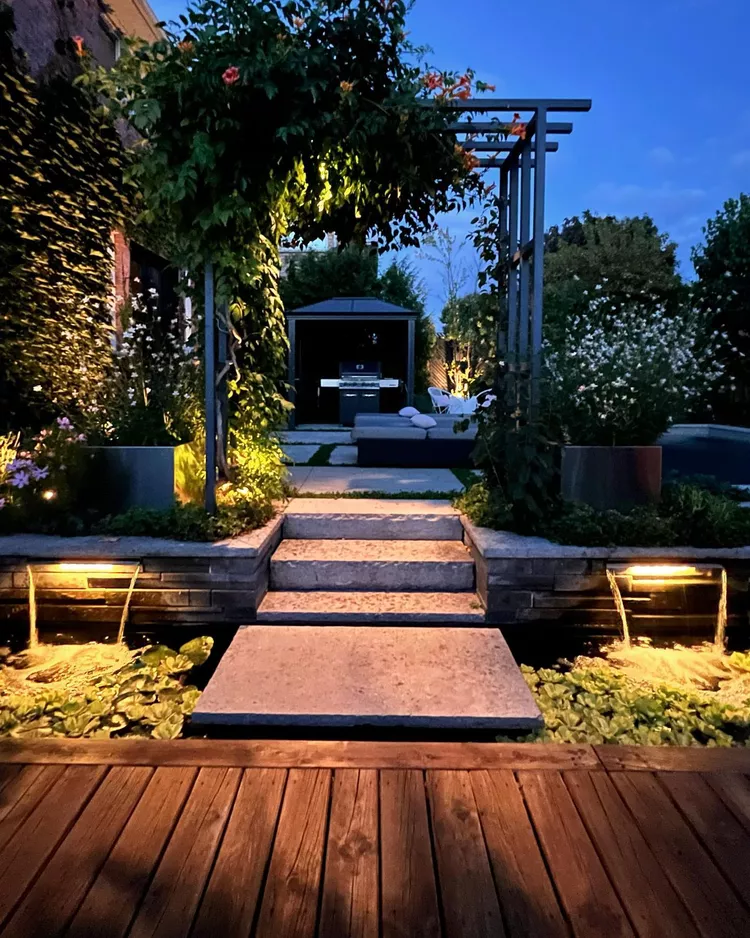
6. Make Outdoor Steps Easier to See
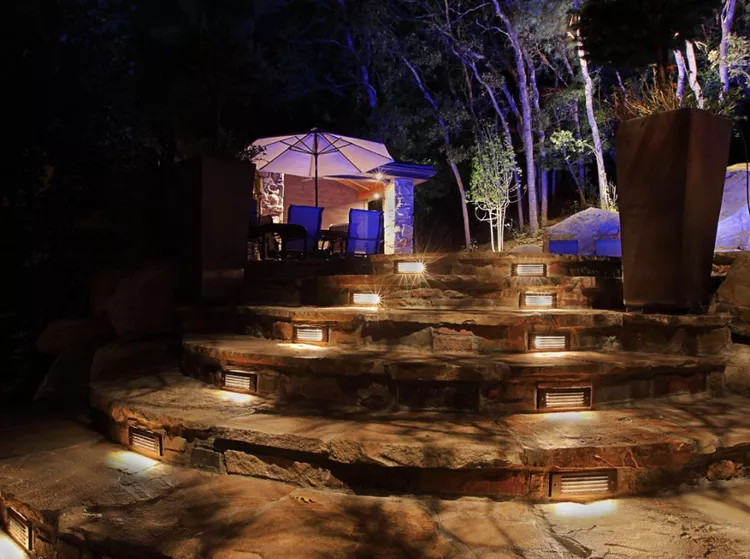
Steps are one of the most important areas to illuminate.
A change in elevation that is obvious during daylight can be much harder to see at night, especially when the surrounding materials are similar in colour.
Step lighting helps define each change in height.
Fixtures can sometimes be incorporated directly into surrounding walls or structures, allowing the light to fall across the walking surface rather than shining into someone’s eyes.
This is particularly useful around patios with multiple levels or properties with significant elevation changes.
7. Illuminate Architectural Features
Landscape lighting doesn’t have to focus exclusively on the yard.
The exterior of the house can become part of the overall design.
Strategically positioned accent lights can highlight features such as:
- Stonework
- Columns
- Entryways
- Interesting rooflines
- Architectural details
- Textured exterior walls
The key word is strategically.
You usually don’t need to illuminate the entire house evenly. Highlighting a few architectural features creates contrast and can give the property more depth after dark.
8. Use Lighting to Define Different Outdoor Areas
Larger backyards often contain several distinct spaces.
You may have a patio near the house, a garden farther into the yard, a fire pit area, and pathways connecting everything together.
Lighting can help visually organize those spaces.
For example, pathway lighting can guide people from the house toward a patio, while accent lighting around trees establishes the edges of the outdoor living area.
Another pool of softer light farther into the yard can draw attention toward a second destination.
This creates a sense of progression through the landscape rather than illuminating everything equally.
9. Create a Focal Point You Can See From Inside
Your landscape isn’t only viewed while you’re standing outside.
Think about what you see through the windows of your home at night.
A beautifully lit tree, garden, or landscape feature can become part of the view from the kitchen, dining room, or living room.
Without outdoor lighting, those same windows may simply look out into darkness.
When planning fixture placement, identify the main sightlines from inside the house.
You may discover that one of the best locations for accent lighting isn’t where you’ll be sitting outside. It’s where the feature can be enjoyed from both indoors and outdoors.
10. Light an Outdoor Kitchen
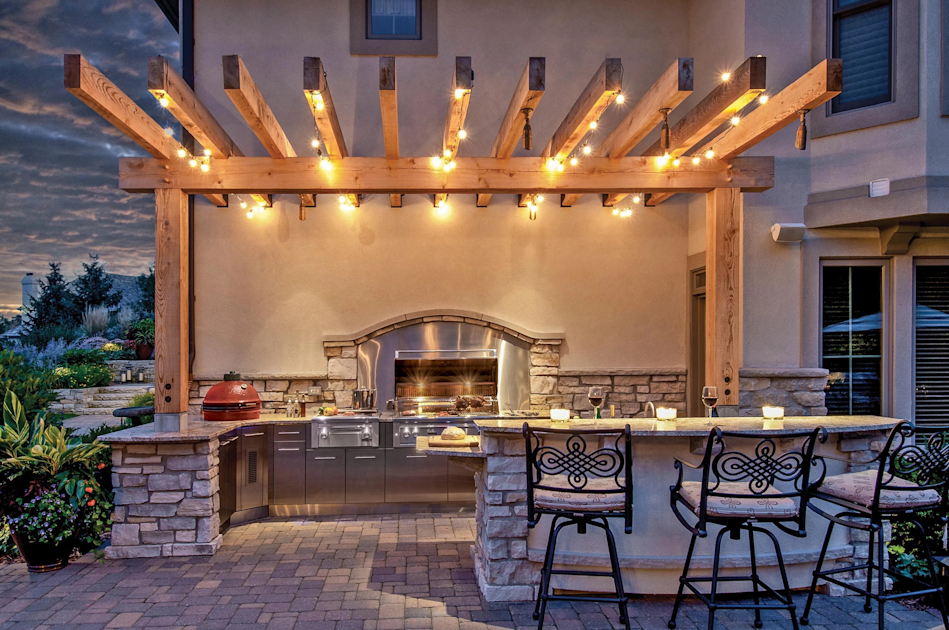
If your backyard includes an outdoor kitchen or barbecue area, lighting needs to serve a practical purpose.
You need enough visibility to safely prepare and cook food.
However, the entire area doesn’t need to be illuminated with one harsh overhead fixture.
Task lighting can be concentrated around food preparation and cooking areas, while softer lighting handles the surrounding dining and entertaining space.
This allows the outdoor kitchen to remain functional without losing the relaxed atmosphere of the patio.
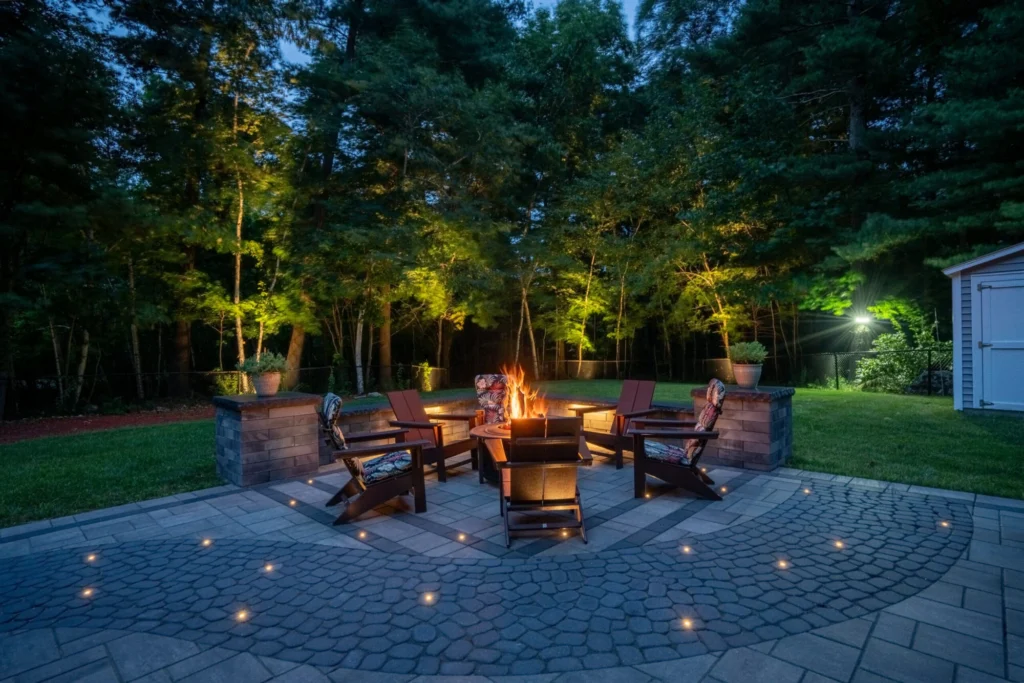
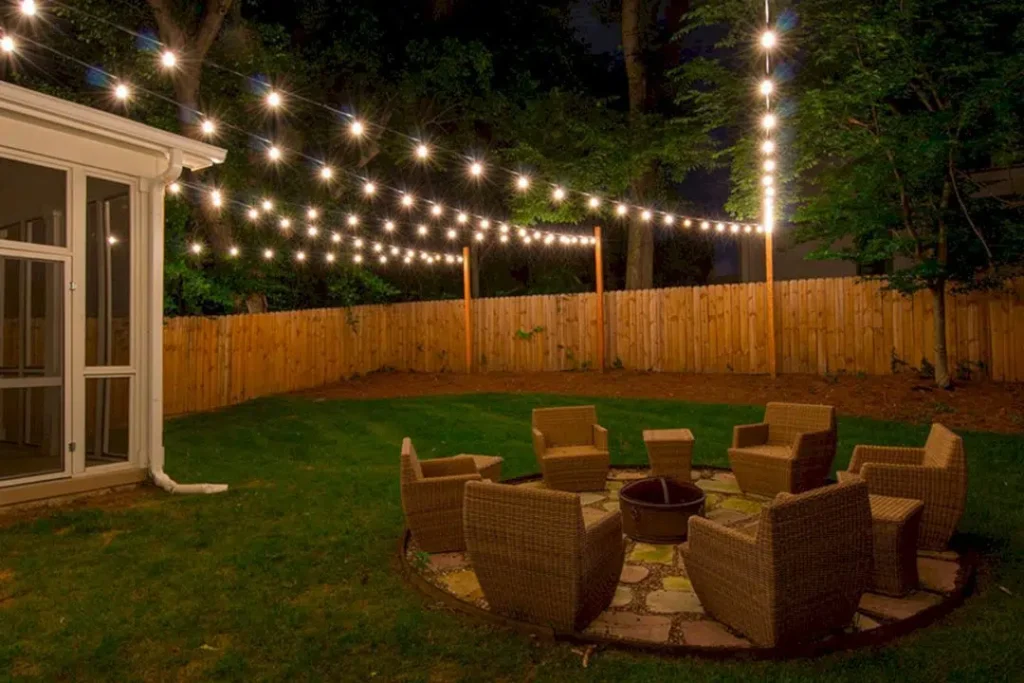
11. Add Lighting Around a Fire Feature
A fire pit or fire table already provides some natural light, so this is an area where restraint matters.
The fire should remain the focal point.
Rather than placing bright fixtures directly around it, consider using subtle lighting along nearby pathways, steps, seating areas, or surrounding landscaping.
This gives people enough visibility to safely move around while preserving the atmosphere created by the fire.
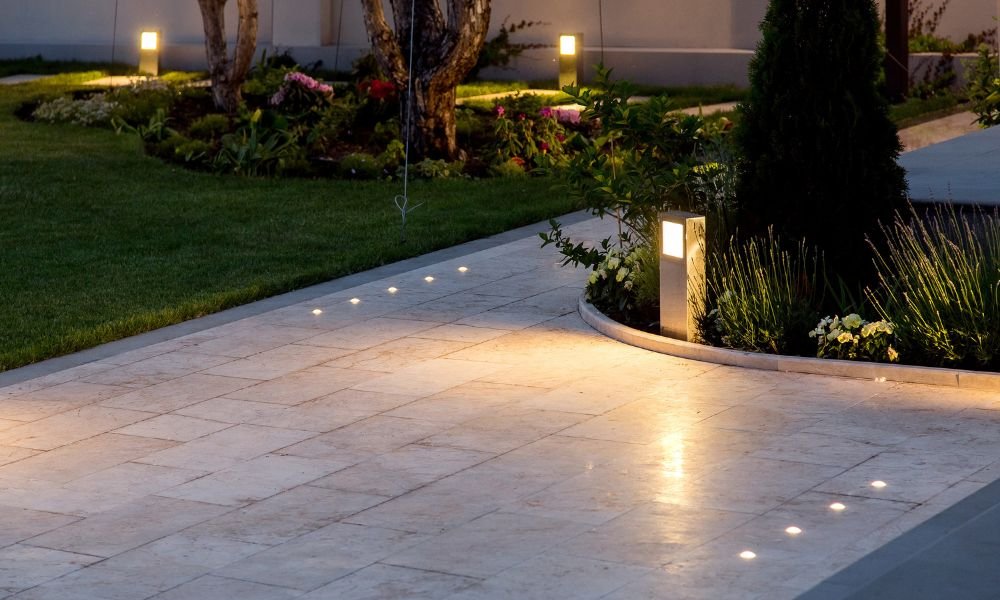
12. Use Downlighting for a Natural Effect
Not all landscape lighting needs to come from the ground.
Downlighting places fixtures higher up and directs light toward the landscape below.
When used carefully, it can create a softer effect that resembles natural moonlight.
A fixture positioned within or near a mature tree, for example, can cast light through branches onto the ground below.
This can create interesting shadows while illuminating a larger area more subtly than a bright floodlight.
Downlighting can work particularly well over garden areas, pathways, and outdoor living spaces.
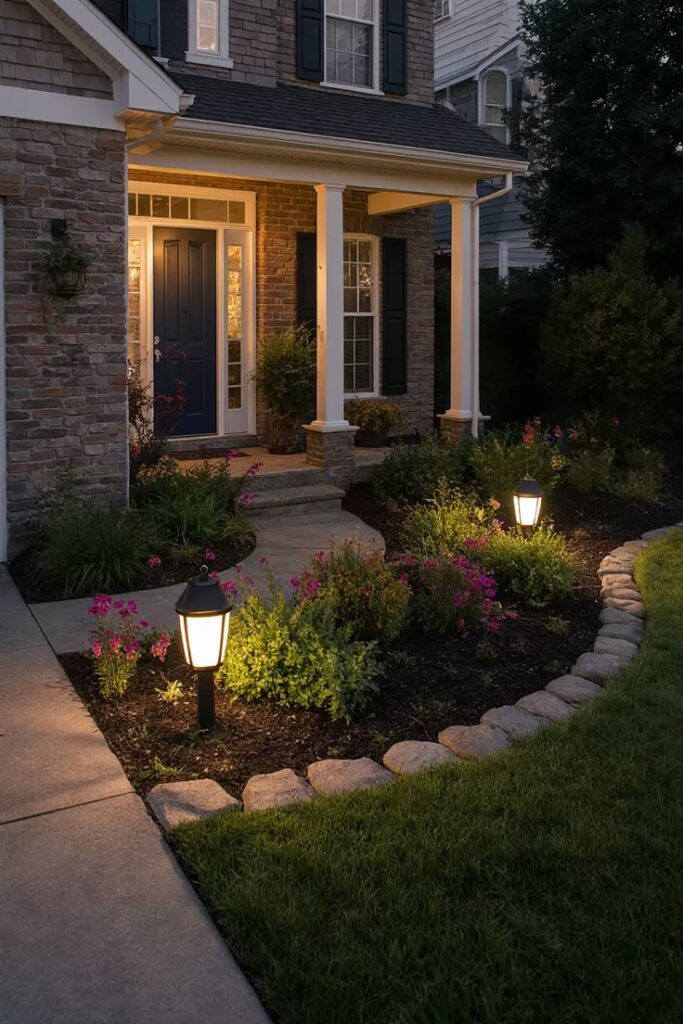
13. Improve Visibility Around Entrances
Lighting around doors and entrances serves both practical and aesthetic purposes.
Homeowners and guests should be able to comfortably navigate from the driveway or walkway to the entrance after dark.
Good lighting can help define:
- Front doors
- Side entrances
- Backyard doors
- Gates
- Garage entrances
These areas can be integrated into the broader landscape lighting plan so they feel connected to the rest of the property rather than treated as separate lighting systems.
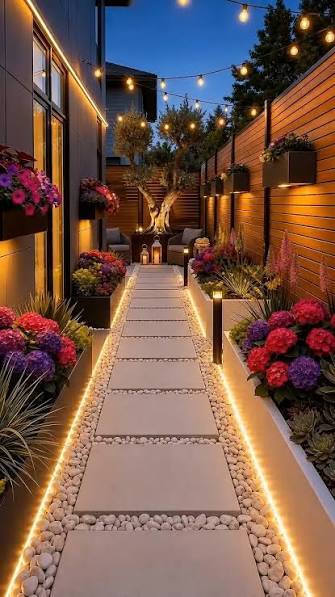
14. Don’t Forget the Side Yard
Side yards are often forgotten when homeowners think about landscape lighting.
But these narrow areas frequently contain important walkways connecting the front and back of the property.
They may also contain:
- Gates
- Steps
- Utility areas
- Garbage storage
- Garden beds
- Changes in grade
A small amount of carefully positioned lighting can make these areas considerably easier to navigate without requiring excessive brightness.
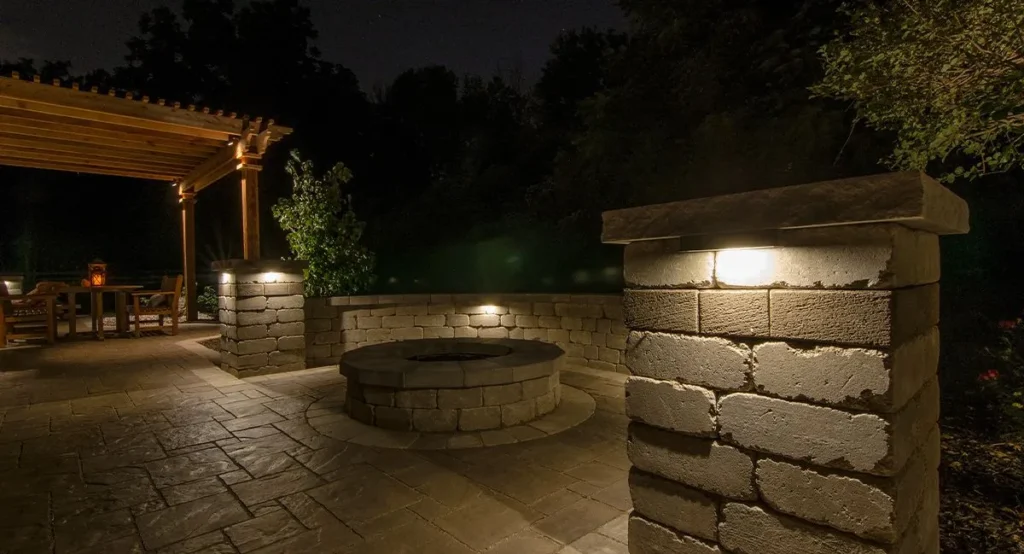
15. Use Lighting to Show Off Stone and Texture
Some landscape materials become even more interesting under directional lighting.
Natural stone, textured retaining-wall blocks, decorative boulders, and other hardscape features create shadows when illuminated from an angle.
Those shadows reveal texture that may not be as noticeable during daylight.
If your landscape already includes attractive stonework, lighting can help you enjoy that investment after dark as well.
Warm Lighting vs. Bright White Lighting
Colour temperature has a major impact on how outdoor lighting feels.
Very bright, cool-white light can sometimes make residential landscapes feel harsh or overly commercial.
Warmer lighting generally creates a softer, more inviting atmosphere around patios, gardens, trees, and other residential spaces.
Different areas may have different functional requirements, but consistency is important.
Using drastically different light colours throughout the yard can make the landscape feel disconnected.
Avoid the Runway Effect
One of the easiest landscape lighting mistakes to make is spacing identical lights evenly along both sides of a walkway.
The result can start looking like an airport runway.
Path lighting usually looks more natural when fixtures are placed according to where light is actually needed rather than following a rigid pattern.
Alternating sides, varying spacing where appropriate, and considering surrounding plants can create a much more organic appearance.
The goal is to illuminate the path, not outline every inch of it.
Don’t Overlight the Backyard
More fixtures don’t automatically create a better design.
Darkness is part of landscape lighting.
Contrast between illuminated areas and darker spaces is what creates depth and directs attention toward important features.
If every tree, plant, wall, pathway, and corner of the yard is equally bright, nothing stands out.
Start by identifying what actually deserves attention.
That might be:
- A beautiful tree
- The main patio
- An interesting stone wall
- A pathway
- A garden
- An architectural feature
Lighting those areas intentionally usually produces a stronger result than trying to eliminate every shadow.
Think About Landscape Lighting During the Design Stage
Lighting is easier to integrate when it’s considered as part of the overall landscape rather than after everything else has been built.
If you’re planning a new patio, walkway, retaining wall, or complete backyard transformation, think about lighting before construction is finished.
That gives you more flexibility when deciding where fixtures should go and how the different areas of the yard should be illuminated.
It also allows the daytime and nighttime versions of the landscape to be designed together.
A patio might look great during the afternoon, but how will people navigate to it after dark?
A retaining wall might solve an elevation problem, but could integrated lighting make the surrounding steps safer?
A new tree might become the perfect nighttime focal point.
Considering these questions early can lead to a much more cohesive finished project.
Plan for Edmonton’s Seasons
Outdoor lighting in Edmonton needs to work through more than warm summer evenings.
Fixtures and their placement should account for changing weather, snow, moisture, and the dramatic differences between summer and winter daylight.
Areas that are easy to navigate during long summer days may become much more dependent on artificial lighting during the darker months of the year.
Snow can also change the appearance of landscape lighting by reflecting light and covering low fixtures.
A good design should therefore consider how the property functions throughout the year, not just during peak landscaping season.
Create a Backyard You Can Enjoy After Dark
Landscape lighting can completely change how you experience your yard.
It can make walkways and steps easier to navigate, extend the usefulness of patios and outdoor kitchens, highlight landscaping you’re proud of, and create an entirely different atmosphere after sunset.
The key is using light with purpose.
Lush Landscaping & Restoration provides outdoor lighting installation in Edmonton for homeowners looking to add pathway lighting, accent lighting, patio lighting, garden lighting, security lighting, and other customized solutions to their landscapes.
Whether lighting is being added to an existing yard or incorporated into a larger landscaping project, planning where and how it’s used can help create an outdoor space that looks just as intentional at night as it does during the day.