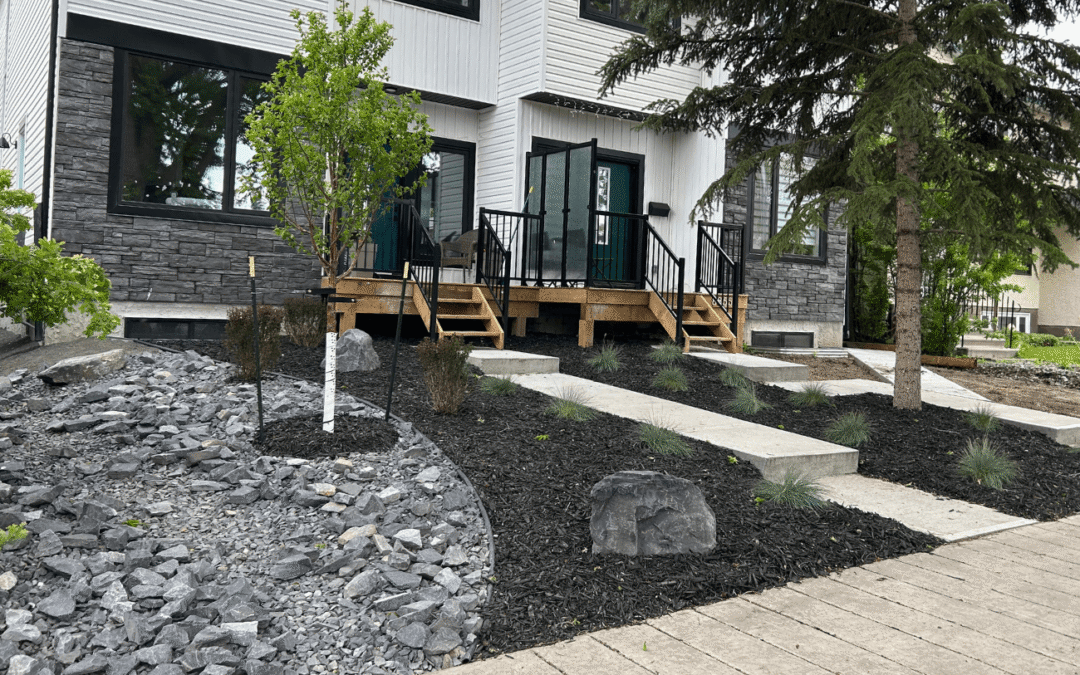
For many homeowners, the goal of landscaping has changed over the years. Instead of creating a yard that requires constant mowing, trimming, watering, and upkeep, more people are looking for outdoor spaces that still look beautiful without demanding hours of maintenance every week.
This shift is especially noticeable in Edmonton, where changing seasons, dry summer periods, and busy schedules make lower-maintenance landscapes increasingly appealing. Homeowners want yards they can enjoy, not ones that constantly feel like another chore on the to-do list.
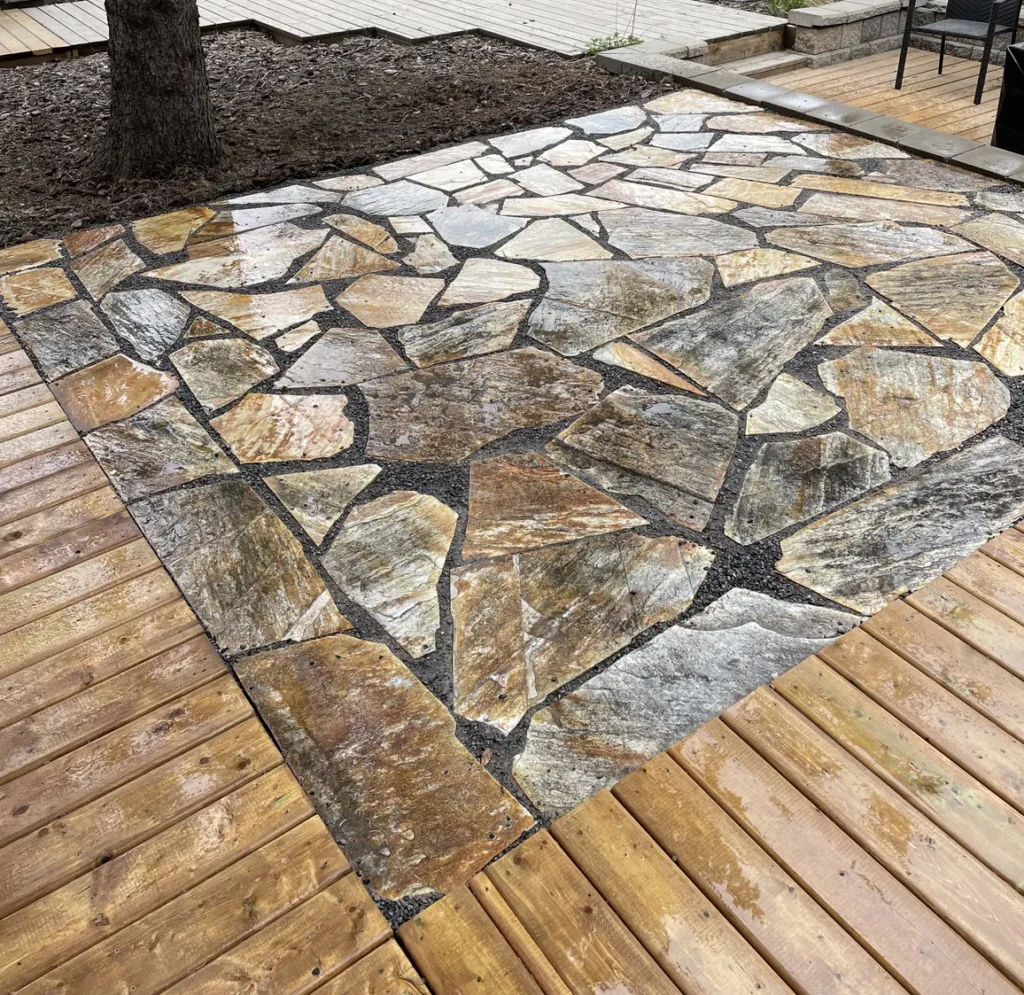
Low-maintenance landscaping doesn’t mean sacrificing appearance. In fact, some of the most attractive outdoor spaces are built around cleaner layouts, durable materials, and practical design choices that reduce upkeep while still feeling polished and inviting.
Edmonton’s Climate Makes Low-Maintenance Landscaping More Practical
One of the biggest reasons homeowners are moving toward lower-maintenance landscaping is Edmonton’s climate.
Between:
- Long winters
- Freeze–thaw cycles
- Dry summer stretches
- Heavy rainfall periods
…yards can take a lot of wear throughout the year.
Traditional landscaping that relies heavily on delicate plants, oversized lawn areas, or high-maintenance garden beds often requires constant attention just to keep it looking healthy.
Low-maintenance landscaping focuses on durability and long-term performance. By choosing materials and plants better suited to Edmonton’s conditions, homeowners can spend less time fixing problems and more time enjoying their outdoor space.
People Want to Spend More Time Enjoying Their Yard
Many homeowners eventually reach the same realization: they want to actually use their backyard instead of constantly maintaining it.
Large lawns, overgrown planting beds, and complicated landscaping layouts can quickly become time-consuming. What initially looked beautiful may eventually feel overwhelming to manage.
This is one reason outdoor living spaces have become increasingly popular. Homeowners are prioritizing:
- Functional seating areas
- Patios for entertaining
- Defined gathering spaces
- Simpler planting layouts
The focus shifts from constant maintenance to creating a yard that works better for everyday life.
A thoughtfully planned low-maintenance yard can still feel warm, welcoming, and visually appealing without demanding constant upkeep.
Reducing Lawn Space Makes a Big Difference
For many Edmonton homeowners, the biggest source of maintenance is lawn care.
Grass often requires:
- Regular mowing
- Fertilizing
- Watering
- Weed control
- Seasonal repair
This is especially frustrating in areas where grass struggles due to shade, soil conditions, or heavy foot traffic.
Low-maintenance landscaping often reduces oversized lawn areas and replaces them with more intentional spaces.
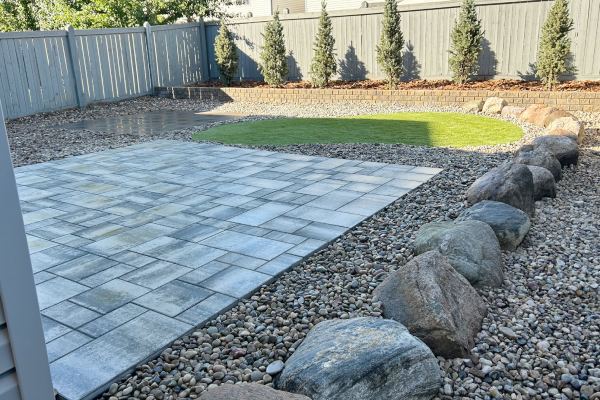
That doesn’t necessarily mean removing grass completely. Instead, many homeowners create a balance by combining:
- Smaller lawn sections
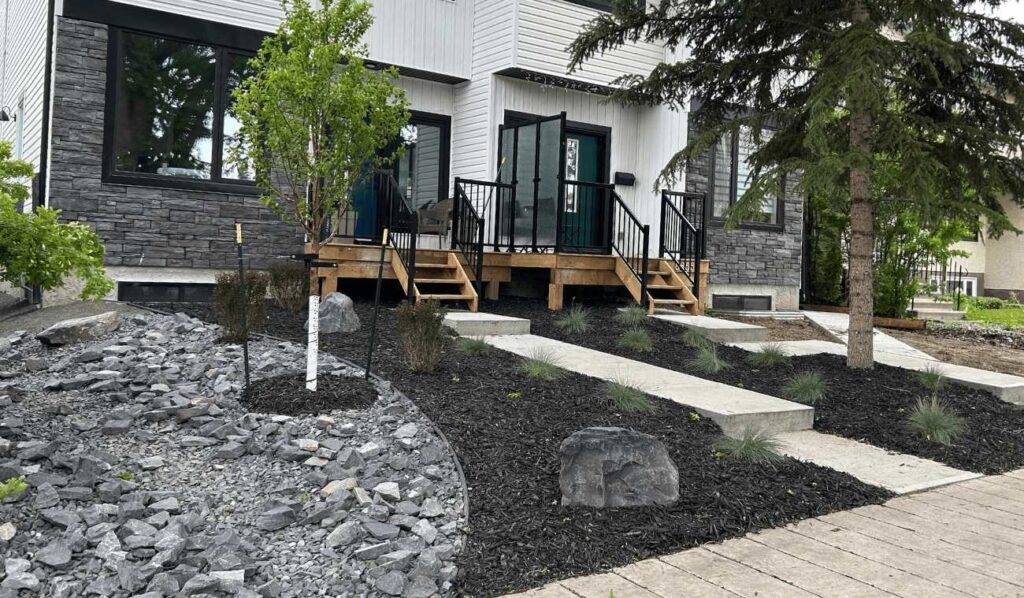
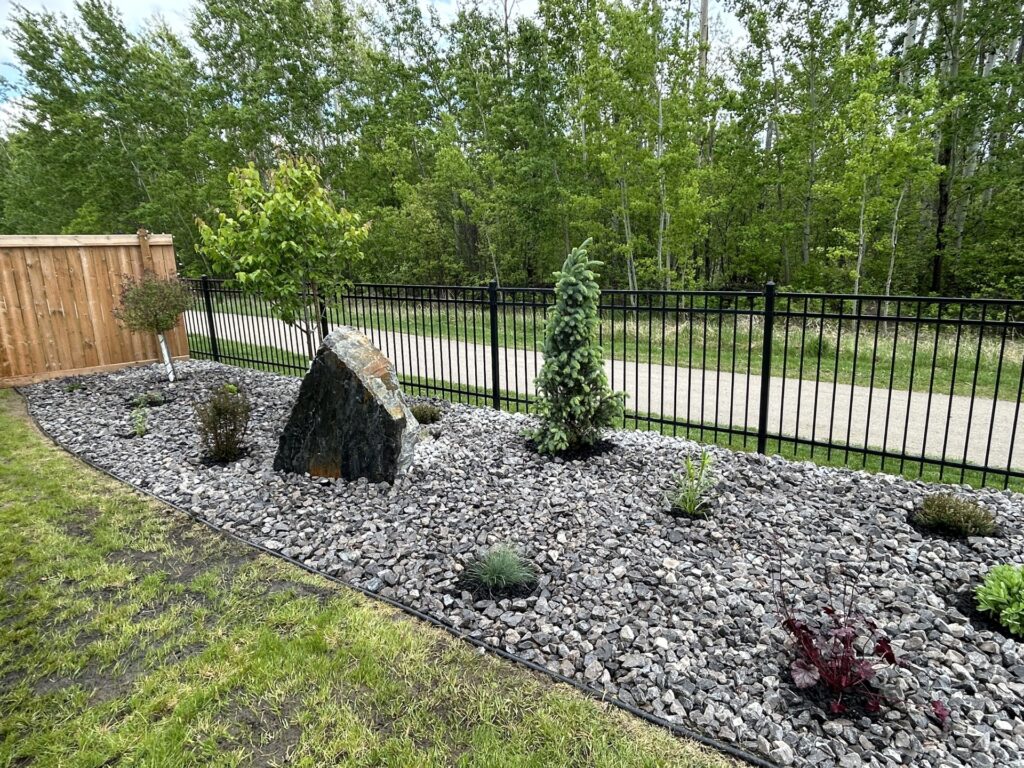
- Decorative rock or mulch areas
- Hardscaping features
- Defined planting spaces
The result is usually a cleaner, more manageable yard without sacrificing curb appeal.
Durable Materials Help Reduce Long-Term Work
Low-maintenance landscaping often relies more heavily on durable materials that hold up over time.
Features like:
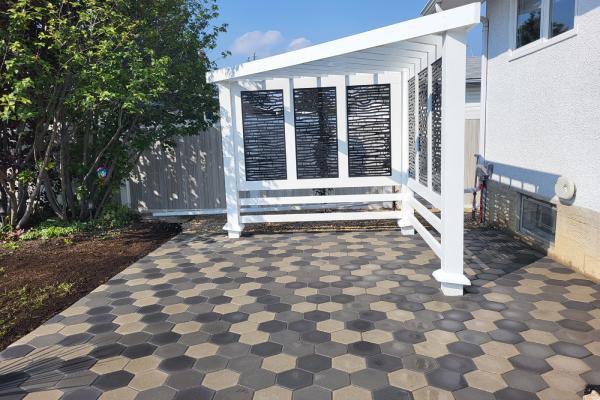
- Patios
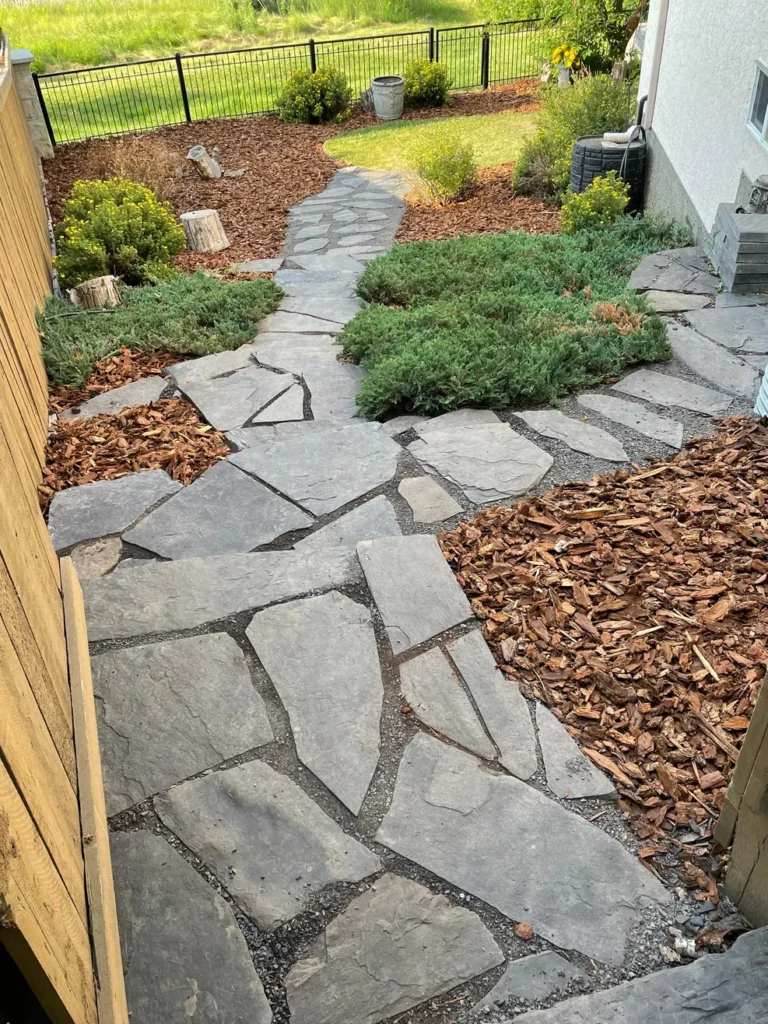
- Walkways
- Decorative edging
- Rock beds
…help reduce the amount of weekly maintenance required while improving how the yard functions.
When installed properly, hardscaping features also tend to last significantly longer than constantly replacing struggling lawn areas or reworking planting beds every season.
The key is designing these elements to feel cohesive rather than overly hard or sterile.

Plant Selection Matters More Than Homeowners Realize
One of the biggest mistakes homeowners make is choosing plants based only on appearance.
In Edmonton, certain plants simply perform better than others.
Low-maintenance landscaping often focuses on:
- Hardy plant varieties
- Drought-tolerant options
- Plants suited to local conditions
- Lower-pruning species
Choosing plants that naturally thrive in Alberta’s climate reduces:
- Watering requirements
- Seasonal replacement
- Ongoing maintenance demands
A well-planned planting strategy often makes a bigger difference than homeowners expect.
Simple Layouts Often Age Better
Another reason low-maintenance landscaping has become so popular is because simpler designs tend to hold up better over time.
Highly detailed landscaping with:
- Too many planting areas
- Complex shapes
- Excessive edging
- Overcrowded features
…often becomes difficult to maintain and starts looking messy if upkeep falls behind.
Cleaner layouts with defined spaces tend to feel more timeless while requiring less effort to keep looking polished.
This is especially important for homeowners who want their yard to still look great years down the road.
Low-Maintenance Doesn’t Mean Boring
One common misconception is that lower-maintenance landscaping means sacrificing beauty or ending up with a yard that feels plain.
In reality, many of the best-designed landscapes balance:
- Texture
- Materials
- Plant variety
- Functional gathering spaces
The goal is creating a yard that feels intentional and attractive without relying on constant maintenance to keep it looking good.
Thoughtful planning makes a huge difference here. Even simple design choices can create a space that feels elevated while staying practical long-term.
A Better Yard Should Require Less Work, Not More
Ultimately, the popularity of low-maintenance landscaping comes down to lifestyle.
Most homeowners want:
- Less maintenance
- More usability
- Better durability
- Outdoor spaces they actually enjoy spending time in
Instead of constantly repairing, mowing, or managing problem areas, a properly planned yard should make life easier.
If you’re looking for ways to simplify your outdoor space, exploring low-maintenance yard solutions can help you create a landscape that works better for your property, your schedule, and Edmonton’s climate.
And if you’d like help planning a lower-maintenance outdoor space, feel free to reach out to our team to discuss your landscaping goals.