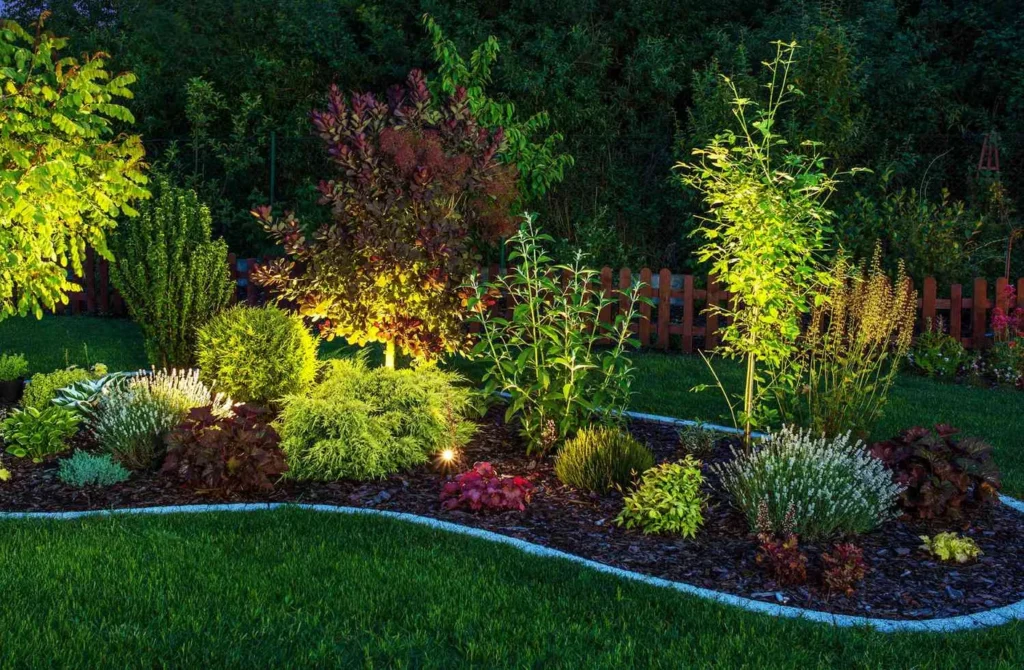
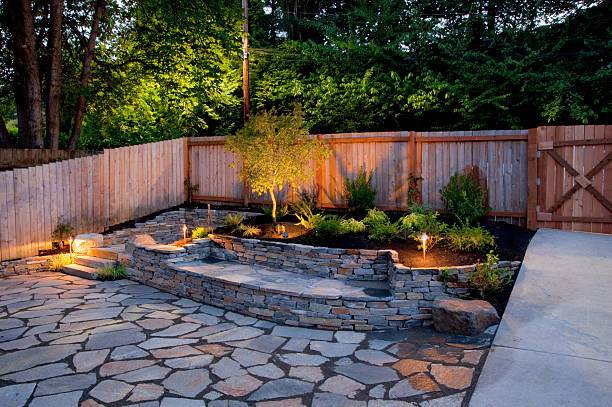
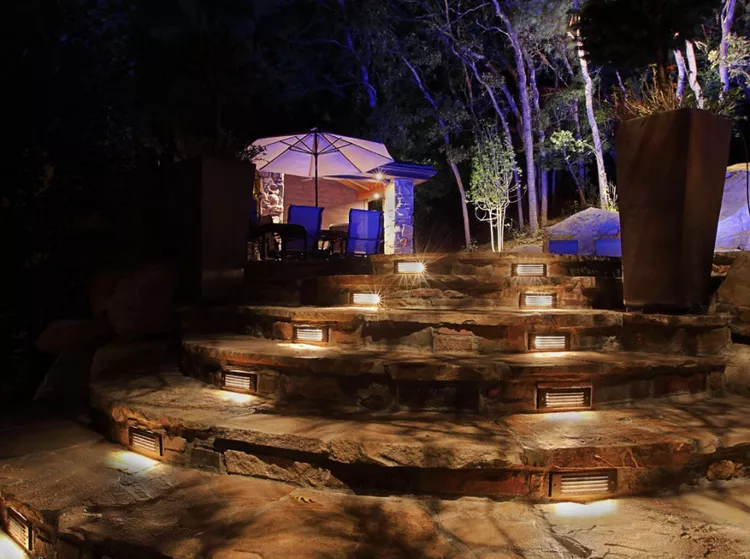
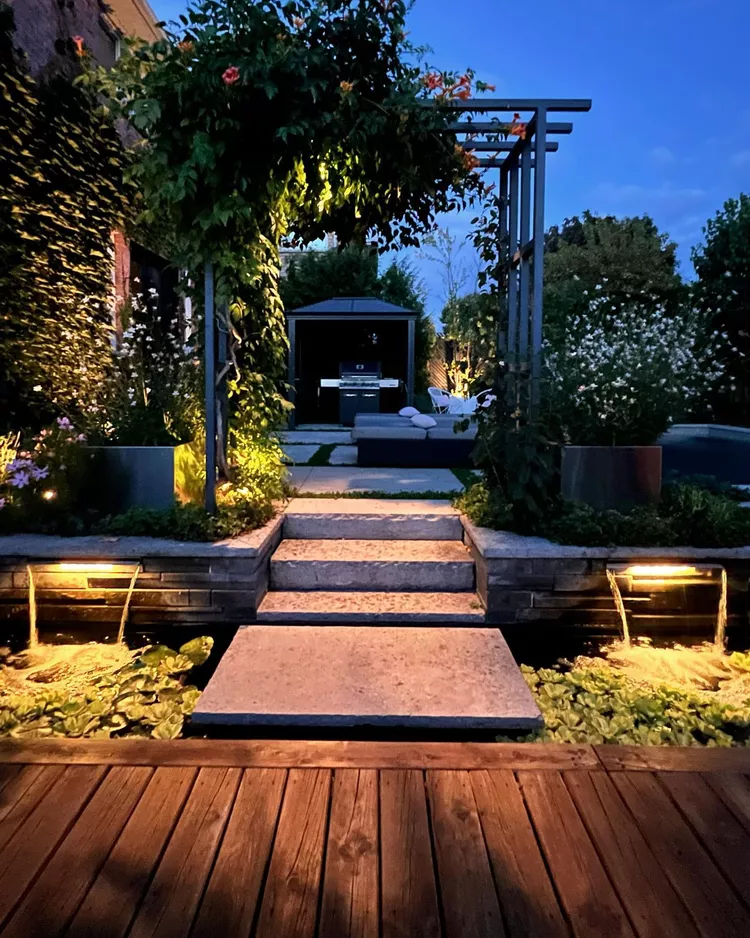
By October, the way you experience your yard begins to change. You arrive home after dark more often, the garden loses some of its summer colour, and the path to your front door becomes an important part of welcoming visitors through the colder months.
Your landscaping can still contribute to your home when the growing season ends. Thoughtfully planned outdoor lighting brings attention to the features that remain, helps you see entrances and walkways, and creates a welcoming setting for holiday gatherings.
With professional outdoor lighting in Edmonton, Lush Landscaping & Restoration can help you plan a yard that looks inviting after sunset and works with the way you use your property.
Start With the Route to Your Front Door
Before choosing decorative lighting, consider how people actually approach your home.
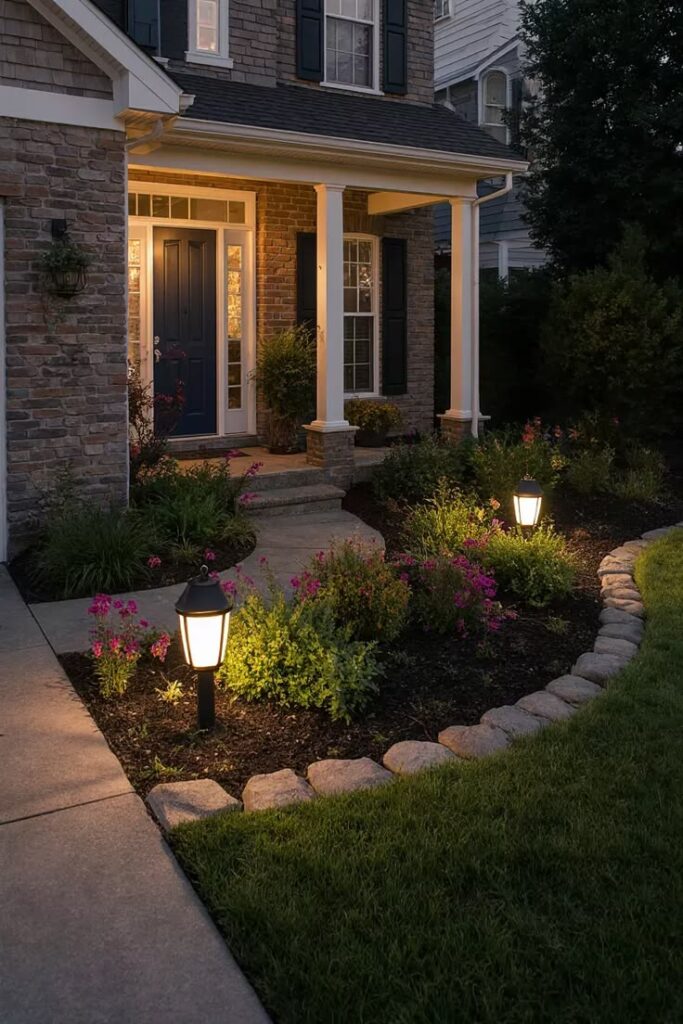
A guest may park on the street, walk along the public sidewalk, turn onto your front path, and climb a few steps before reaching the entrance. Each transition deserves attention, particularly when visitors are unfamiliar with your property.
Look for areas where the route becomes difficult to see:
A turn in the walkway.
Steps or changes in elevation.
The transition between the driveway and front path.
A gate or side entrance.
The landing outside your front door.
The goal is to illuminate the walking surface and make changes in level easier to recognise. Fixtures should direct light where it is useful without shining into someone’s eyes.
Lighting also needs to work with the walkway itself. If you are considering a wider path or a different entrance layout, include lighting in your landscape design plans so both elements work together.
Remember that lighting supports visibility. It does not replace snow clearing, ice management, or repairs to damaged walking surfaces.
Create a Welcoming Entrance Without Flooding the Yard With Light
More brightness does not automatically create a better result.
A powerful light beside the garage may illuminate a large area while leaving the front steps in shadow. It may also create glare or make the rest of the yard appear especially dark by comparison.
A more balanced approach gives each light a purpose. The entrance needs enough illumination to identify the door and use the steps. The walkway needs a visible route. Selected landscape features can receive softer accent lighting.
Warm-coloured light is often a good starting point for a welcoming residential setting. DarkSky International and the Illuminating Engineering Society recommend outdoor lighting that is useful, targeted, no brighter than necessary, controlled, and warm-coloured. DarkSky International
This approach helps create a comfortable appearance while limiting unnecessary spill into neighbouring properties.
Give Your Landscape a Winter Focal Point
When flowers fade and deciduous trees lose their leaves, the structure of your yard becomes more noticeable.
A mature tree, stone wall, evergreen planting, or carefully designed entrance can give the property visual interest through winter. Lighting can help reveal those features after dark.
Rather than illuminating every corner, identify the features that matter most from the street and from inside your home. You might want to see the shape of an evergreen near the entrance or the texture of stonework beside the front path.
Aim and shield fixtures carefully so light stays on the intended feature. Avoid sending unnecessary light above the feature or into nearby windows.
Lush’s landscape lighting services can help connect these visual details with the practical lighting your property needs.
Plan Fixture Placement Around Snow and Snow Clearing
A lighting layout should account for how the yard functions in winter.
A small fixture that looks well placed beside a path in summer may become buried by snow. A light positioned where snow is routinely piled may also become difficult to access or vulnerable to damage.
Before finalising locations, consider:
Where you shovel or push snow.
Where a snow blower or clearing equipment travels.
Areas where snow tends to accumulate.
Whether fixtures will remain visible as snow builds up.
How you will access lights for cleaning or maintenance.
The aim is to keep fixtures out of clearing routes while maintaining useful illumination. In some locations, an integrated step light or another protected placement may be worth discussing instead of a fixture standing beside the path.
Fixture height and position should be chosen for the actual property, rather than copied from a summer garden photo.
Choose Components for Their Outdoor Location
Edmonton conditions make equipment selection an important part of the plan.
Lighting components should be appropriate for their installation location and the temperatures and moisture exposure they will encounter. Check manufacturer specifications for fixtures, controls, transformers, and other equipment rather than assuming every outdoor product performs equally in winter.
Connections, cable routing, and installation details also matter. Plan wiring so it does not create a trip hazard or interfere with snow clearing.
Electrical work should meet applicable requirements and be handled by qualified professionals where required. A consultation can help establish which installation approach makes sense for your property.
Let Holiday Decorations Complement the Landscape Lighting
Seasonal decorations can bring colour and personality to your home. Permanent landscape lighting provides a foundation beneath those decorations.
For example, holiday string lights may frame the roofline while pathway lighting guides visitors towards the entrance. Once the decorations come down, the pathway lighting remains useful.
Think about how the layers work together. If you add bright seasonal displays, you may need to adjust the surrounding lighting to avoid an overly busy appearance.
Keep temporary cords away from walking and snow-clearing routes, and use decorations and accessories rated for their intended outdoor use.
The strongest long-term plan serves everyday needs while leaving room for seasonal changes.
Use Controls That Match Your Routine
Outdoor lighting does not need to remain at full brightness all night.
Timers, suitable sensors, and other controls can help provide illumination when you need it. A practical schedule might light the entrance for evening arrivals and switch off decorative lighting later at night.
Consider what each area requires. Accent lighting may follow a schedule, while a side entrance may benefit from a motion sensor. Sensor placement matters so it detects the intended approach without unnecessary activation.
Review schedules as daylight changes through the year. Controls should make the system easier to manage rather than leave you adjusting individual lights every evening.
October Is a Useful Time to Assess Your Yard
Autumn gives you an opportunity to notice where your existing lighting falls short.
Walk the route from your parking area to the front door after sunset. View the property from the street and look out from the rooms you use in the evening.
Ask yourself:
Can visitors clearly identify the entrance?
Are the steps and turns in the path visible?
Does a light shine into your eyes or a neighbour’s window?
Which landscape features disappear completely after dark?
Will the proposed fixture locations conflict with winter maintenance?
Bring those observations to a consultation. Installation timing depends on weather, ground conditions, project scope, and availability, so discuss what can be completed this season and what may be better planned for later.
Plan a More Welcoming Edmonton Yard With Lush Landscaping
A well-planned lighting system helps your landscape remain part of your home through the colder months. It can give the entrance a welcoming appearance, improve visibility along important routes, and highlight features you enjoy long after summer ends.
As a landscaping company in Edmonton, Lush Landscaping & Restoration brings outdoor lighting and landscape design together to create a cohesive plan for your property.
Few things ruin a summer evening on the patio faster than a cloud of swarming mosquitoes and moths. For decades, the common assumption was simple: bugs are attracted to bright outdoor lights.
Because of this belief, many Edmonton homeowners hesitate to install landscape lighting, worried that illuminating their patios, walkways, or garden borders will turn their backyard into an insect sanctuary.
However, groundbreaking entomology research has flipped that old assumption on its head.
If you are planning an outdoor living space or want to enjoy your yard late into the evening, here is the real science behind why bugs hover around lights, why recent local weather is driving up insect numbers, and how strategic landscape lighting actually protects your home without inviting pests.
The New Science: It Is Confusion, Not Attraction
For generations, scientists assumed flying insects were drawn to light like a moth to a flame. Some believed insects mistook porch lamps for the moon, while others thought they sought warmth or were blinded by the glare.
A study published in Nature Communications by researchers at Imperial College London and the Florida Museum of Natural History revealed what is actually happening: artificial lights scramble an insect’s innate navigational system.
For over 370 million years, flying insects relied on a natural instinct known as the “dorsal light response.” To keep themselves right-side-up in the dark, insects automatically position their backs toward the brightest light source, which historically was always the sky.
Old Insect Belief
What Modern Research Discovered
Bugs actively seek out light
Insects are trying to navigate, not reach the bulb
Insects mistake lights for the moon
Celestial navigation plays no role in bulb swarming
Lights draw bugs from miles away
Point-source lights confuse nearby flying insects
Insects want the warmth of bulbs
Behavior happens around cold LED sources just as often
When an insect flies near a point-source light, like an exposed bulb or searchlight, its visual system tells it to keep its back to the beam. This forces the insect to tilt continuously, leading to erratic flight patterns, endless circling, and midair flipping.
In short, artificial light traps insects in a state of spatial confusion rather than attracting them.
Why Edmonton Is Seeing an Insect Surge This Season
While light orientation explains why bugs circle your fixtures, Edmonton’s recent weather explains why there are so many insects in the first place.
Following record-breaking summer rainfall across Edmonton, saturated soils, high groundwater tables, and standing water pockets have created ideal breeding conditions for mosquitoes and other pests. Standing water in garden beds, clogged downspouts, or low spots in lawns act as prime nurseries for larvae.
Even with an increase in local insect populations, turning off your outdoor lights is not the answer.
How to Fix the Bug Problem Without Sacrificing Outdoor Lighting
You do not need to sit in the dark to avoid bugs. Combining smart lighting design with effective pest management lets you enjoy a bright, comfortable backyard throughout the warm summer months.
1. Upgrade to Downward-Directed Fixtures
The Nature Communications study discovered a crucial detail: insect flight was least disrupted by lights shining straight downward.
Unshielded bulbs that broadcast light in all directions cause severe insect confusion. Low-voltage fixture designs, such as downward-facing path lights, step lights, and hardscape accent fixtures, direct light precisely onto ground surfaces. This provides path safety for your family while keeping flying insects from losing their horizon.
2. Switch to Warm LED Color Temperatures
Insects respond strongly to cool, blue-spectrum light and short ultraviolet wavelengths. Modern landscape lighting uses warm-toned LEDs (around 2,700K to 3,000K). Warm LED bulbs emit minimal UV radiation and produce a rich, golden glow that is significantly less disruptive to nocturnal insects.
3. Rethink Your Outdoor Bug Repellents
Homeowners use various methods to clear bugs from their patio, but some traditional tactics work far better than others.
Bug Control Method
Effectiveness Level
Primary Drawback or Limitation
Citronella Candles
Low / Limited Range
Very short radius; breeze dissipates scent quickly
Standard Bug Zappers
Counterproductive
Kills beneficial predatory insects while missing mosquitoes
Targeted Mosquito Sprays
Moderate to High
Requires regular reapplication throughout wet months
Bait Bags & Traps
High (if placed away)
Lures pests directly to the trap; keep 30+ feet from patios
Professional Yard Drainage
High (Long-term)
Eliminates breeding grounds by removing standing water
While citronella candles offer a pleasant aroma, their protective range is extremely small. Meanwhile, traditional bug zappers actually worsen backyard pest problems by killing harmless, beneficial insects like beetles and lacewings, while completely ignoring blood-feeding pests like female mosquitoes.
For the best results, combine warm downward lighting with targeted yard treatments and proper site grading to eliminate standing water.
Why Outdoor Lighting Is Essential for Edmonton Homes
Choosing to forego landscape lighting out of fear of bugs means missing out on the critical benefits illuminated properties offer.
Core Benefit
How Outdoor Lighting Protects & Enhances Your Property
Home Security
Eliminates dark corners and deters opportunistic intruders
Property Safety
Illuminates steps, deck transitions, and stone walkways to prevent falls
Wildlife Deterrent
Keeps urban wildlife like bats, raccoons, and bears away from living spaces
Curb Appeal & Value
Enhances architectural features and increases property resale appeal
Security & Intruder Deterrence
Well-planned landscape lighting eliminates blind spots around entry doors, garage corridors, and side yards. Illuminating these areas discourages unwanted visitors and ensures your home stays visible from the street.
Nighttime Safety for Family, Guests, and Pets
Slipping on an unseen step or tripping over a garden border can lead to serious injury. Proper illumination along walkways, patio edges, and stairways keeps your family, guests, and pets safe after dark.
Edmonton’s green spaces and river valley corridors bring urban wildlife into residential neighborhoods. Bright, well-lit perimeter borders help deter larger wildlife, including bats, raccoons, and stray animals, from taking up residence near your home or deck.
Boosting Curb Appeal and Home Value
Architectural lighting elevates your home’s nighttime appearance, highlighting natural stone features, custom patios, and mature trees. In a competitive real estate market, professional landscape lighting adds measurable curb appeal and highlights your property’s exterior investment.
Illuminate Your Yard the Right Way with Lush Landscaping
Lush Landscaping team in Edmonton
Bugs around fixtures are a sign of orientation confusion caused by poor lighting placement, not an inescapable tax on having a brightly lit yard. By installing warm, downward-directed LED fixtures alongside proper site drainage, you can enjoy a safe, secure, and bug-free outdoor space year-round.
At Lush Landscaping, we design custom outdoor lighting systems tailored to Edmonton yards, balancing aesthetics, security, and climate performance.
A backyard doesn’t have to become unusable as soon as the sun goes down.
The right landscape lighting can make patios more inviting, improve visibility along walkways and steps, highlight some of the best features of your landscaping, and completely change how the yard feels at night.
Good outdoor lighting isn’t about making your property as bright as possible. In fact, too much light can make a backyard feel harsh and take away from the atmosphere you’re trying to create. The best designs use light selectively, putting it where it improves safety, functionality, or the appearance of the landscape.
If you’re planning your own backyard, here are some landscape lighting ideas that work particularly well for Edmonton homes.
1. Light the Path Through Your Yard
Walkway lighting is one of the most practical places to start.
Paths that are easy to navigate during the day can become difficult to see at night, particularly when they include curves, steps, changes in elevation, or transitions between different materials.
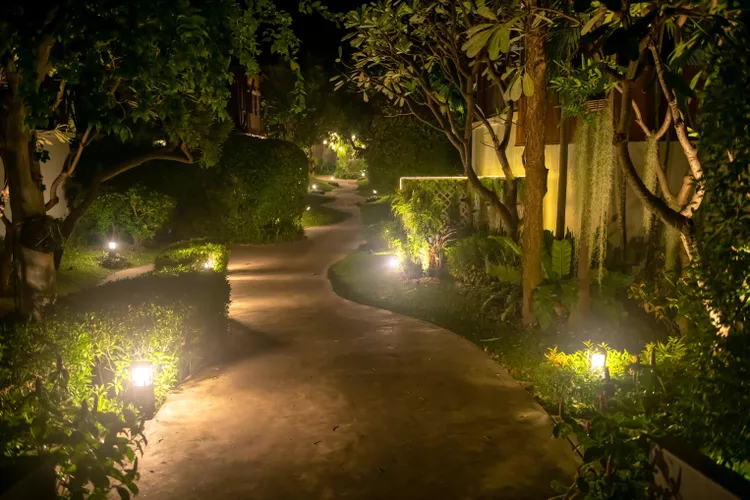
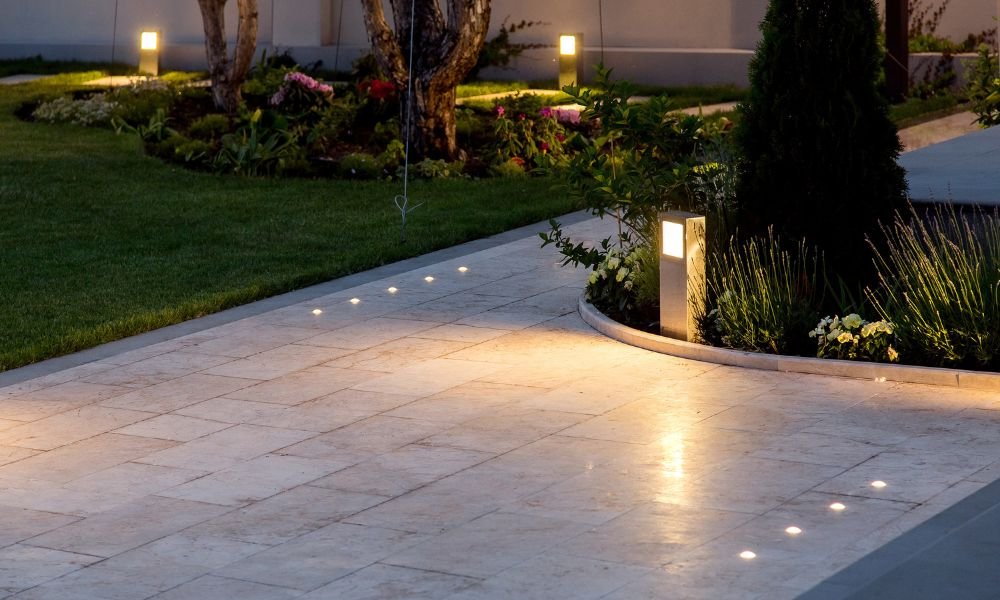
Strategically placed pathway lights can illuminate the route without flooding the entire yard with light.
They work especially well along:
Front walkways
Backyard paths
Garden paths
Routes between the house and patio
Side-yard walkways
Paths leading to sheds or other structures
The fixtures themselves don’t necessarily need to be the focal point.
Well-planned outdoor lighting should help people naturally understand where to walk while still allowing the surrounding landscape to remain the star of the show.
2. Create a More Inviting Patio
If you’ve invested in a patio, lighting can help you get more use out of it.
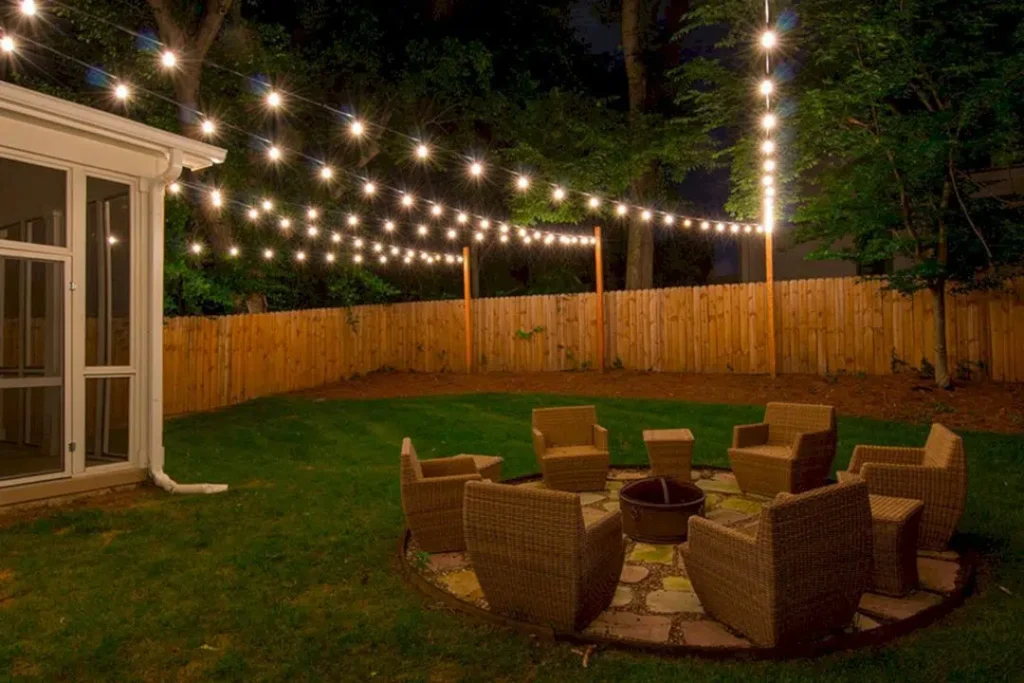
Edmonton’s summer evenings are one of the best times to enjoy the backyard. Lighting allows outdoor dinners, conversations, and gatherings to continue well after natural light starts fading.
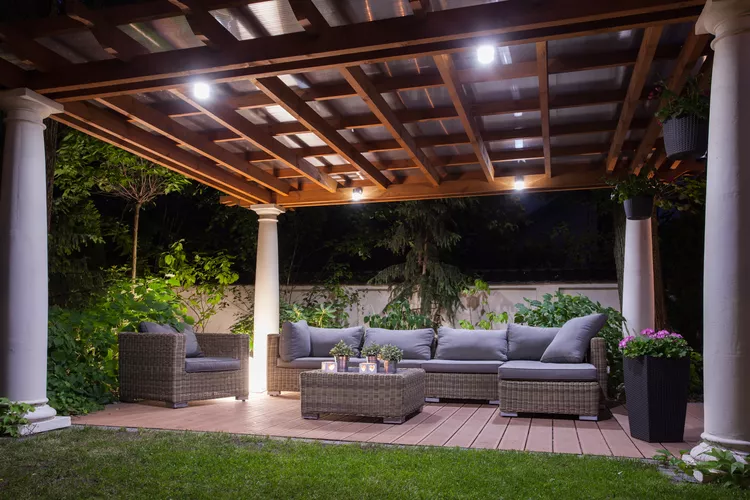
Instead of relying on one extremely bright fixture attached to the house, consider using several softer sources of light.
Patio lighting might include:
Lighting around the perimeter
Lights incorporated into nearby steps
Accent lighting around planting beds
Lighting beneath seating walls
Soft illumination around an outdoor kitchen
Lights directed toward nearby trees or landscape features
The goal is to create enough visibility to comfortably use the space without making it feel like you’re sitting under a spotlight.
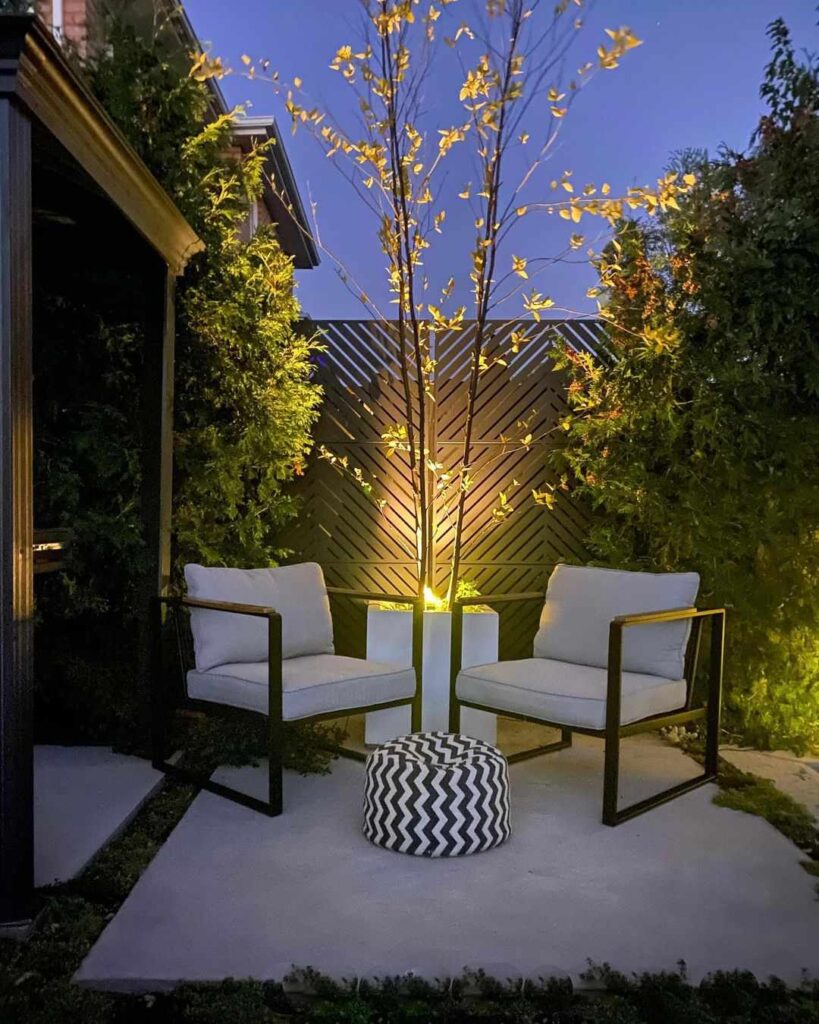
3. Use Uplighting to Highlight Trees
Mature trees can become some of the most dramatic features in a landscape after dark.
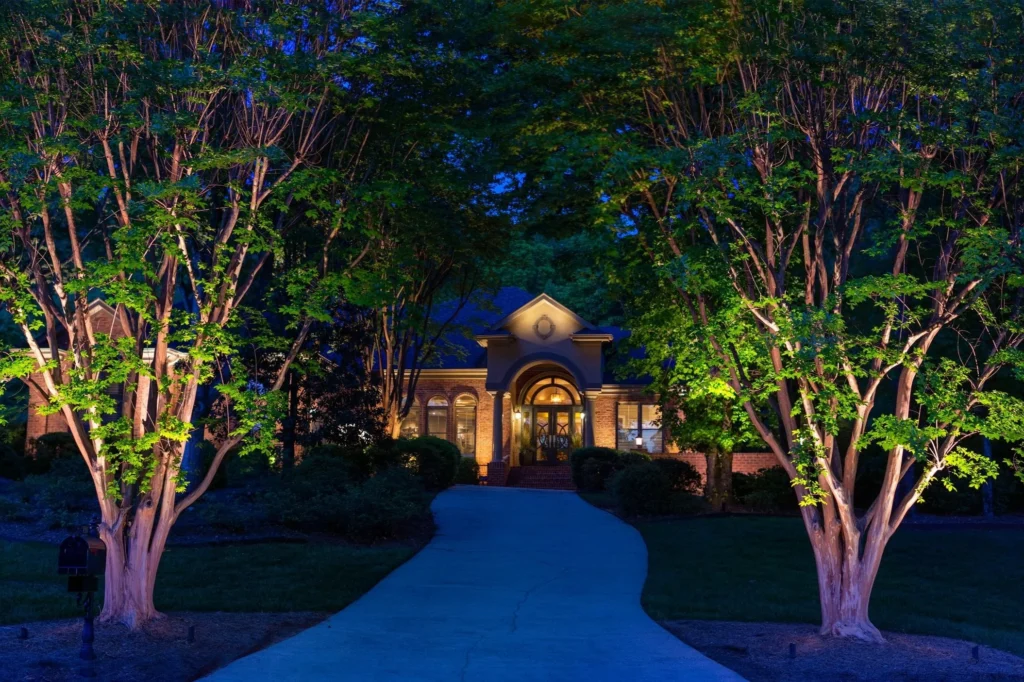
Uplighting involves positioning a fixture near ground level and directing the light upward into the trunk and canopy.
During the day, the tree is simply part of the landscape. At night, the lighting reveals its shape, texture, and branching structure in an entirely different way.
This technique can work particularly well with distinctive mature trees or trees positioned near patios and other gathering spaces.
You don’t need to illuminate every tree in the yard.
Choosing one or two strong focal points usually creates a more intentional effect.
4. Highlight Garden Beds
A lot of work goes into selecting plants and creating garden beds, but much of that detail disappears after sunset.
Low-level accent lighting can help bring some of it back.
Rather than illuminating every plant individually, focus on areas with interesting shapes and textures.
You might highlight:
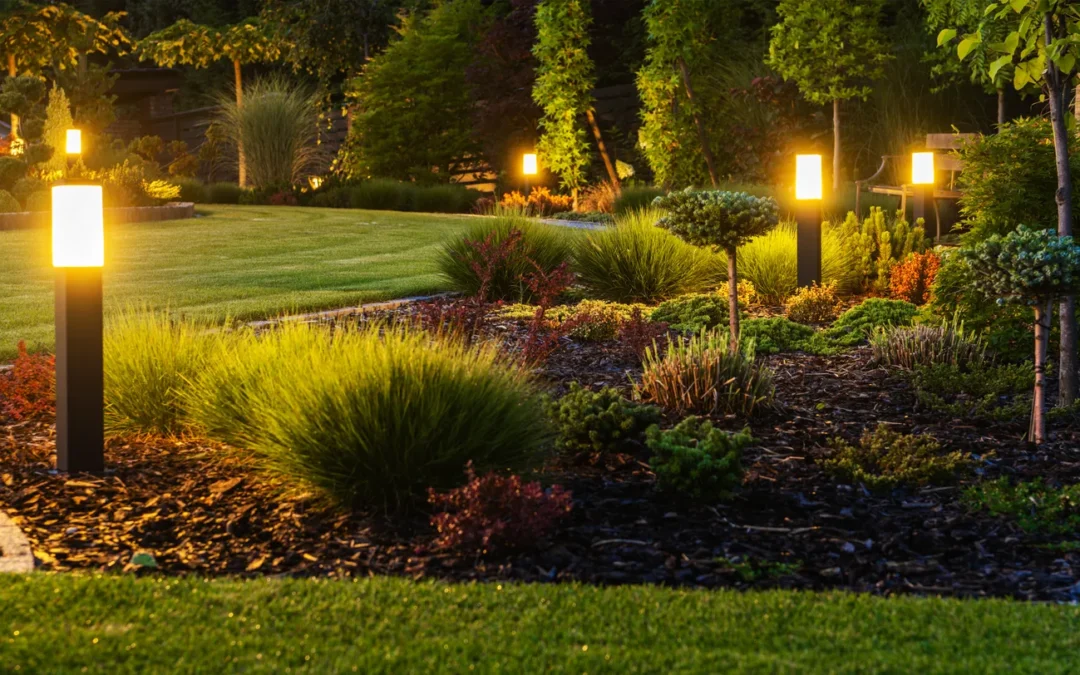
Ornamental grasses
Shrubs
Feature plants
Large planters
Decorative boulders
Layered planting beds
Small ornamental trees
Lighting from different angles can create shadows and depth, giving the landscape more dimension at night.
A professionally planned landscape lighting design can also account for how plants will grow so fixtures aren’t quickly hidden or overwhelmed as the landscape matures.
5. Add Lighting to Retaining Walls
Retaining walls provide a great opportunity to incorporate lighting directly into the hardscape.
Depending on the design, lights can be positioned along or within the wall to softly illuminate the area below it.
This works particularly well when a retaining wall borders:
A patio
A walkway
Steps
A garden bed
A change in elevation
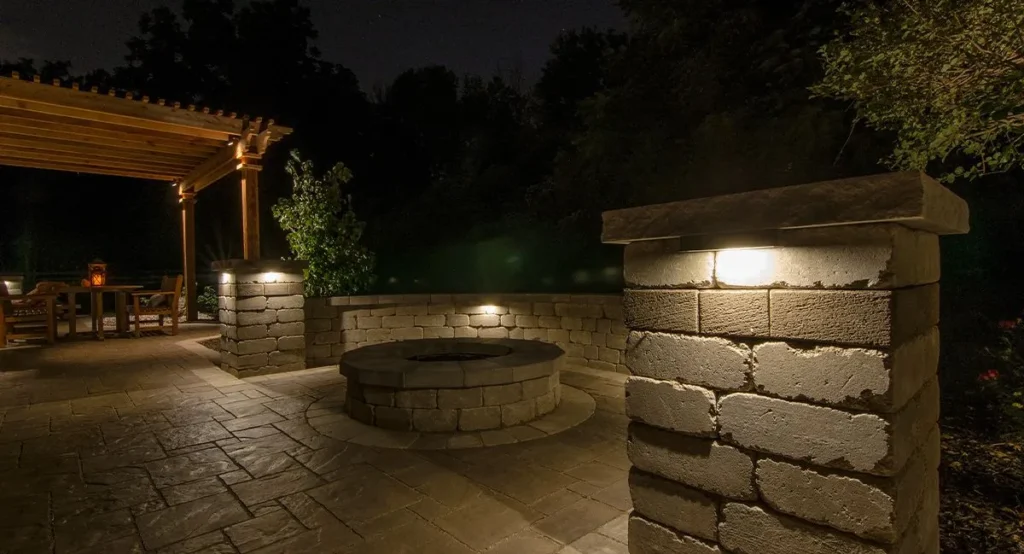
Lighting can also emphasize the texture of stone or block after dark.
Instead of viewing the retaining wall as purely structural, lighting allows it to become part of the nighttime landscape design.
6. Make Outdoor Steps Easier to See
Steps are one of the most important areas to illuminate.
A change in elevation that is obvious during daylight can be much harder to see at night, especially when the surrounding materials are similar in colour.
Step lighting helps define each change in height.
Fixtures can sometimes be incorporated directly into surrounding walls or structures, allowing the light to fall across the walking surface rather than shining into someone’s eyes.
This is particularly useful around patios with multiple levels or properties with significant elevation changes.
7. Illuminate Architectural Features
Landscape lighting doesn’t have to focus exclusively on the yard.
The exterior of the house can become part of the overall design.
Strategically positioned accent lights can highlight features such as:
Stonework
Columns
Entryways
Interesting rooflines
Architectural details
Textured exterior walls
The key word is strategically.
You usually don’t need to illuminate the entire house evenly. Highlighting a few architectural features creates contrast and can give the property more depth after dark.
8. Use Lighting to Define Different Outdoor Areas
Larger backyards often contain several distinct spaces.
You may have a patio near the house, a garden farther into the yard, a fire pit area, and pathways connecting everything together.
Lighting can help visually organize those spaces.
For example, pathway lighting can guide people from the house toward a patio, while accent lighting around trees establishes the edges of the outdoor living area.
Another pool of softer light farther into the yard can draw attention toward a second destination.
This creates a sense of progression through the landscape rather than illuminating everything equally.
9. Create a Focal Point You Can See From Inside
Your landscape isn’t only viewed while you’re standing outside.
Think about what you see through the windows of your home at night.
A beautifully lit tree, garden, or landscape feature can become part of the view from the kitchen, dining room, or living room.
Without outdoor lighting, those same windows may simply look out into darkness.
When planning fixture placement, identify the main sightlines from inside the house.
You may discover that one of the best locations for accent lighting isn’t where you’ll be sitting outside. It’s where the feature can be enjoyed from both indoors and outdoors.
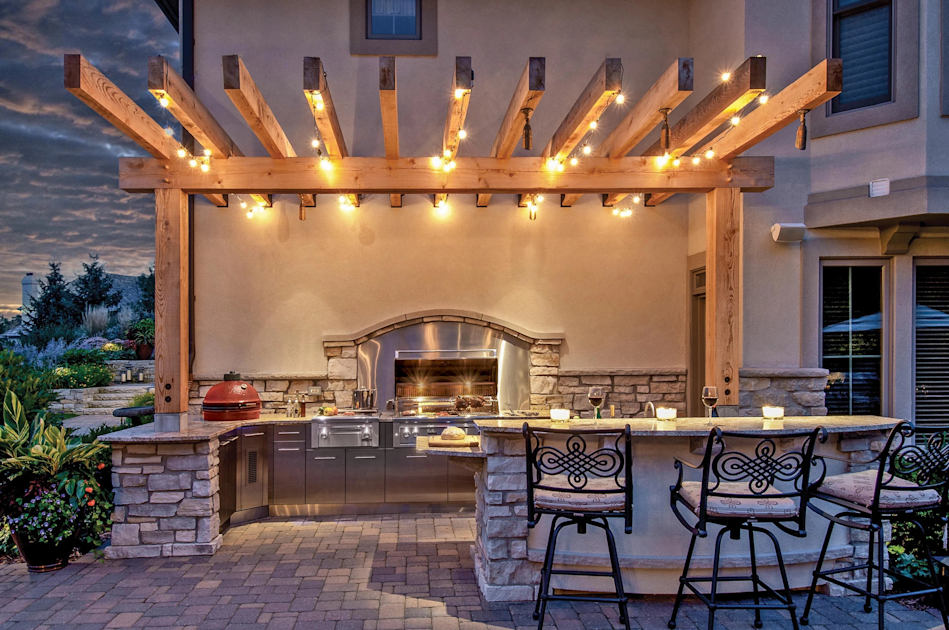
10. Light an Outdoor Kitchen
If your backyard includes an outdoor kitchen or barbecue area, lighting needs to serve a practical purpose.
You need enough visibility to safely prepare and cook food.
However, the entire area doesn’t need to be illuminated with one harsh overhead fixture.
Task lighting can be concentrated around food preparation and cooking areas, while softer lighting handles the surrounding dining and entertaining space.
This allows the outdoor kitchen to remain functional without losing the relaxed atmosphere of the patio.
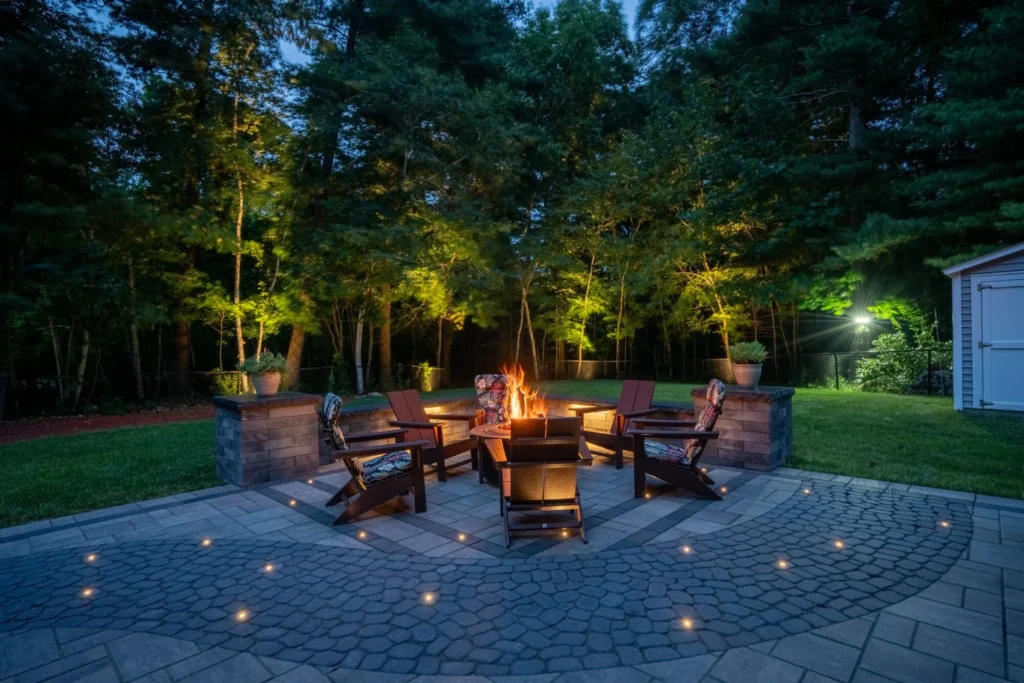
11. Add Lighting Around a Fire Feature
A fire pit or fire table already provides some natural light, so this is an area where restraint matters.
The fire should remain the focal point.
Rather than placing bright fixtures directly around it, consider using subtle lighting along nearby pathways, steps, seating areas, or surrounding landscaping.
This gives people enough visibility to safely move around while preserving the atmosphere created by the fire.
12. Use Downlighting for a Natural Effect
Not all landscape lighting needs to come from the ground.
Downlighting places fixtures higher up and directs light toward the landscape below.
When used carefully, it can create a softer effect that resembles natural moonlight.
A fixture positioned within or near a mature tree, for example, can cast light through branches onto the ground below.
This can create interesting shadows while illuminating a larger area more subtly than a bright floodlight.
Downlighting can work particularly well over garden areas, pathways, and outdoor living spaces.
13. Improve Visibility Around Entrances
Lighting around doors and entrances serves both practical and aesthetic purposes.
Homeowners and guests should be able to comfortably navigate from the driveway or walkway to the entrance after dark.
Good lighting can help define:
Front doors
Side entrances
Backyard doors
Gates
Garage entrances
These areas can be integrated into the broader landscape lighting plan so they feel connected to the rest of the property rather than treated as separate lighting systems.
14. Don’t Forget the Side Yard
Side yards are often forgotten when homeowners think about landscape lighting.
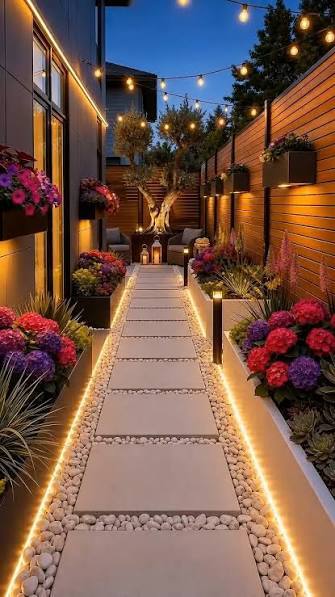
But these narrow areas frequently contain important walkways connecting the front and back of the property.
They may also contain:
Gates
Steps
Utility areas
Garbage storage
Garden beds
Changes in grade
A small amount of carefully positioned lighting can make these areas considerably easier to navigate without requiring excessive brightness.
15. Use Lighting to Show Off Stone and Texture
Some landscape materials become even more interesting under directional lighting.
Natural stone, textured retaining-wall blocks, decorative boulders, and other hardscape features create shadows when illuminated from an angle.
Those shadows reveal texture that may not be as noticeable during daylight.
If your landscape already includes attractive stonework, lighting can help you enjoy that investment after dark as well.
Warm Lighting vs. Bright White Lighting
Colour temperature has a major impact on how outdoor lighting feels.
Very bright, cool-white light can sometimes make residential landscapes feel harsh or overly commercial.
Warmer lighting generally creates a softer, more inviting atmosphere around patios, gardens, trees, and other residential spaces.
Different areas may have different functional requirements, but consistency is important.
Using drastically different light colours throughout the yard can make the landscape feel disconnected.
Avoid the Runway Effect
One of the easiest landscape lighting mistakes to make is spacing identical lights evenly along both sides of a walkway.
The result can start looking like an airport runway.
Path lighting usually looks more natural when fixtures are placed according to where light is actually needed rather than following a rigid pattern.
Alternating sides, varying spacing where appropriate, and considering surrounding plants can create a much more organic appearance.
The goal is to illuminate the path, not outline every inch of it.
Don’t Overlight the Backyard
More fixtures don’t automatically create a better design.
Darkness is part of landscape lighting.
Contrast between illuminated areas and darker spaces is what creates depth and directs attention toward important features.
If every tree, plant, wall, pathway, and corner of the yard is equally bright, nothing stands out.
Start by identifying what actually deserves attention.
That might be:
A beautiful tree
The main patio
An interesting stone wall
A pathway
A garden
An architectural feature
Lighting those areas intentionally usually produces a stronger result than trying to eliminate every shadow.
Think About Landscape Lighting During the Design Stage
Lighting is easier to integrate when it’s considered as part of the overall landscape rather than after everything else has been built.
If you’re planning a new patio, walkway, retaining wall, or complete backyard transformation, think about lighting before construction is finished.
That gives you more flexibility when deciding where fixtures should go and how the different areas of the yard should be illuminated.
It also allows the daytime and nighttime versions of the landscape to be designed together.
A patio might look great during the afternoon, but how will people navigate to it after dark?
A retaining wall might solve an elevation problem, but could integrated lighting make the surrounding steps safer?
A new tree might become the perfect nighttime focal point.
Considering these questions early can lead to a much more cohesive finished project.
Plan for Edmonton’s Seasons
Outdoor lighting in Edmonton needs to work through more than warm summer evenings.
Fixtures and their placement should account for changing weather, snow, moisture, and the dramatic differences between summer and winter daylight.
Areas that are easy to navigate during long summer days may become much more dependent on artificial lighting during the darker months of the year.
Snow can also change the appearance of landscape lighting by reflecting light and covering low fixtures.
A good design should therefore consider how the property functions throughout the year, not just during peak landscaping season.
Create a Backyard You Can Enjoy After Dark
Landscape lighting can completely change how you experience your yard.
It can make walkways and steps easier to navigate, extend the usefulness of patios and outdoor kitchens, highlight landscaping you’re proud of, and create an entirely different atmosphere after sunset.
The key is using light with purpose.
Lush Landscaping & Restoration provides outdoor lighting installation in Edmonton for homeowners looking to add pathway lighting, accent lighting, patio lighting, garden lighting, security lighting, and other customized solutions to their landscapes.
Whether lighting is being added to an existing yard or incorporated into a larger landscaping project, planning where and how it’s used can help create an outdoor space that looks just as intentional at night as it does during the day.