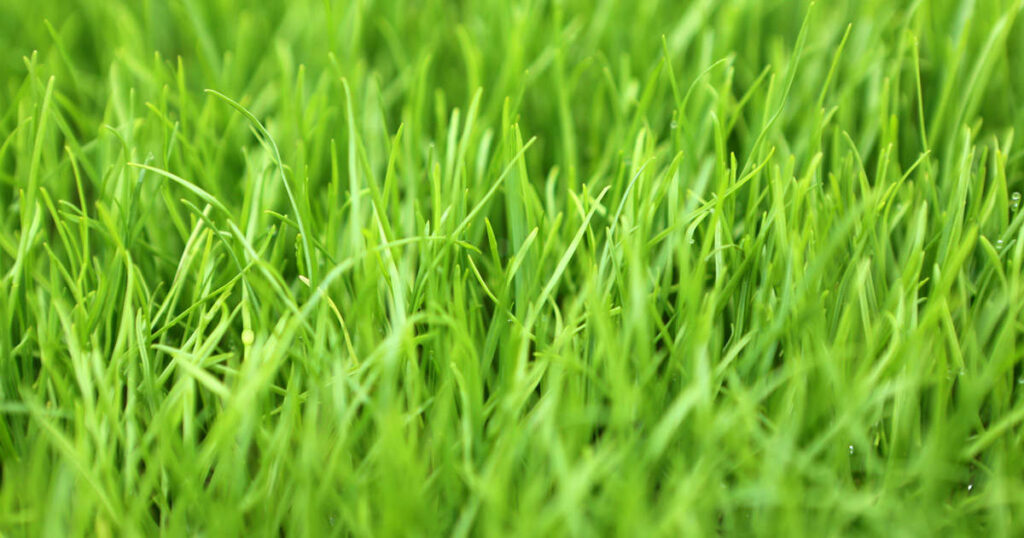
Choosing the right grass for your lawn matters more than many homeowners realize. A lawn that looks lush and healthy in one climate may struggle in another, especially in a place like Edmonton where winters are long, summers can be dry, and temperature swings are common throughout the year.
If you’ve ever dealt with patchy grass, bare spots, excessive watering, or constant maintenance, the issue may not be how you’re caring for your lawn. It may simply be that the grass type isn’t well suited to Edmonton’s conditions.
The good news is that there are several grass varieties that perform well in Alberta. The best choice depends on what matters most to you, whether that’s appearance, durability, drought resistance, shade tolerance, or lower maintenance.
Here’s a breakdown of the most common grass types used in Edmonton lawns and how each one performs.
Why Grass Choice Matters in Edmonton
Edmonton’s climate presents a unique set of challenges for lawns.
Homeowners are dealing with:
Long, cold winters
Freeze–thaw cycles in spring and fall
Dry summer periods
Heavy rainfall at certain times of year
Clay-heavy soil in many neighborhoods
Because of this, grass selection becomes much more important than simply choosing what looks good.
A lawn that thrives in warmer or wetter climates may struggle to survive Alberta winters or require significantly more maintenance to stay healthy. Choosing the right grass from the beginning often means less watering, fewer repairs, and a lawn that looks better long-term.
Kentucky Bluegrass
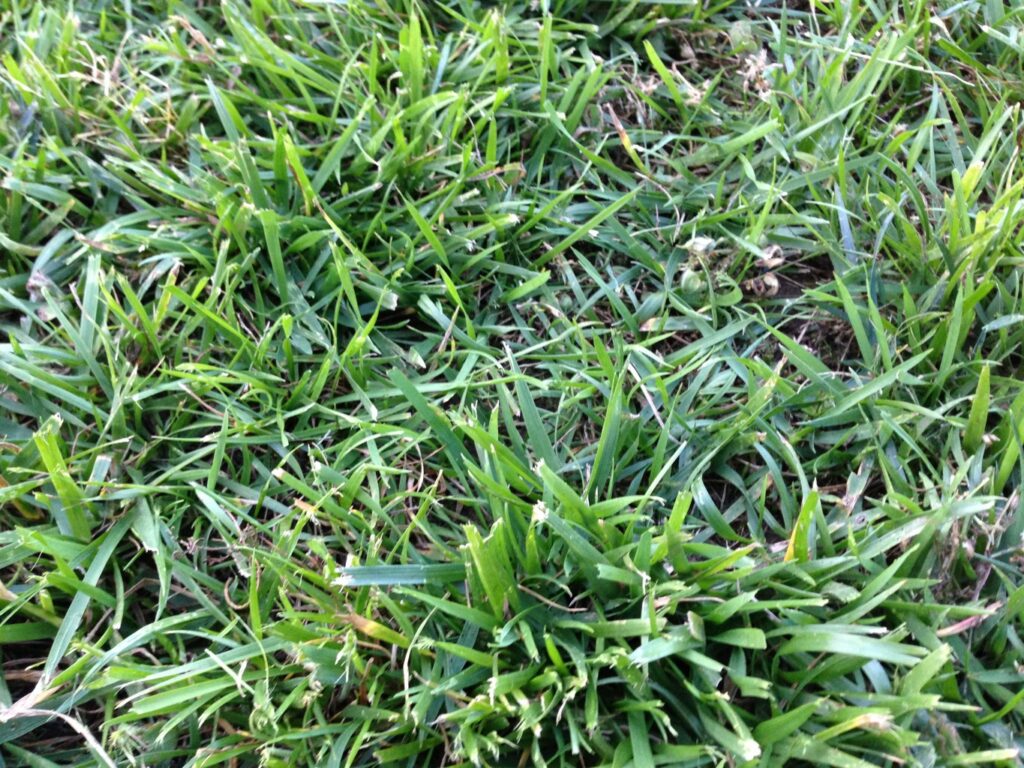
Kentucky Bluegrass is one of the most popular lawn grasses in Alberta and is often what homeowners picture when they imagine a thick, lush green lawn.
It spreads through underground stems called rhizomes, which helps it naturally repair damaged areas over time. This self-repairing ability makes it especially appealing for families, pets, and high-traffic lawns.
Kentucky Bluegrass performs well in Edmonton but tends to require more maintenance than some other options. It thrives with proper watering and fertilization and generally prefers full sun.
Pros
Rich, attractive green appearance
Excellent cold tolerance for Alberta winters
Self-repairing growth habit
Holds up well to foot traffic
Cons
Requires more watering than some alternatives
Higher fertilizer needs
Struggles more in heavily shaded areas
Can require more maintenance overall
Best For
Homeowners who prioritize appearance and want a traditional, full-looking lawn.
Fine Fescue
Fine Fescue is a popular choice for homeowners looking for a lower-maintenance lawn.
This grass type generally requires less water and fertilizer than Kentucky Bluegrass while still maintaining a soft, attractive appearance. It also performs better in partial shade, making it useful for properties with trees or areas that don’t receive full sun.
Because it grows more slowly, Fine Fescue typically requires less mowing as well.
However, it does not tolerate heavy foot traffic quite as well as Kentucky Bluegrass, which can be a drawback for families with active kids or pets.
Pros
Lower water requirements
Less mowing and maintenance
Performs well in shaded areas
Strong drought tolerance
Cons
Less durable under heavy traffic
Can appear thinner than Kentucky Bluegrass
Repairs itself more slowly
Best For
Homeowners looking for a more low-maintenance lawn or yards with partial shade.
Creeping Red Fescue
Creeping Red Fescue is technically a type of Fine Fescue, but it deserves special attention because of how well it performs in colder climates like Edmonton.
It spreads slowly underground and performs especially well in cooler, shaded environments. It’s often included in premium seed blends because it helps create a dense lawn while requiring relatively little maintenance.
Many homeowners with mature trees or shaded yards find this grass performs much better than traditional sun-loving varieties.
Pros
Excellent shade tolerance
Strong cold-weather performance
Lower watering needs
Soft texture and natural appearance
Cons
Less wear tolerance than stronger grasses
Can struggle in very high-traffic areas
Slower to recover from damage
Best For
Shady yards and homeowners wanting lower-maintenance grass.
Turf-Type Tall Fescue
Turf-Type Tall Fescue has become increasingly popular in Alberta because of its strong drought tolerance and deep root system.
Unlike Kentucky Bluegrass, Tall Fescue develops roots that reach deeper into the soil, helping it survive dry periods with less watering. This makes it an attractive option for homeowners who want to reduce water usage or avoid constant lawn maintenance.
It also tends to tolerate wear reasonably well, making it a solid middle-ground option.
The tradeoff is that it doesn’t self-repair as effectively because it grows in bunches rather than spreading underground.
Pros
Excellent drought tolerance
Deep root system
Requires less watering
Good durability for active yards
Cons
Does not self-repair easily
Can feel slightly coarser in texture
Less traditional lawn appearance
Best For
Homeowners prioritizing drought resistance and reduced watering.
Perennial Ryegrass
Perennial Ryegrass is rarely used by itself in Edmonton lawns but plays an important supporting role in many grass seed blends.
Its biggest strength is how quickly it germinates. While some grasses take weeks to establish, Perennial Ryegrass sprouts rapidly, helping fill in bare areas and establish coverage quickly.
However, it is not as winter-hardy as other Alberta-friendly grasses, which means it works best as part of a mix rather than as a standalone lawn.
Pros
Germinates very quickly
Great for repairing patchy lawns
Attractive green appearance
Good wear tolerance
Cons
Less cold tolerant than other options
Often performs best only in blends
Can struggle long-term on its own
Best For
Overseeding and helping mixed lawns establish faster.
Why Grass Seed Mixes Usually Work Best in Edmonton
For most Edmonton homeowners, the best lawn is usually not made of just one type of grass.
Many premium lawn seed blends combine several grasses together to create a stronger, more resilient lawn.
For example:
Kentucky Bluegrass adds density and self-repairing ability
Fine Fescue improves drought tolerance and shade performance
Ryegrass helps establish coverage quickly
Blends work well because they balance strengths and weaknesses.
If one grass struggles during a particularly dry season or colder winter, the others often help maintain the lawn’s overall appearance and health.
This is one reason professionally selected seed blends often outperform single-species lawns over time.
What Grass Is Best for Your Goals?
The best grass really depends on how you want your lawn to function.
Best for Appearance
Kentucky Bluegrass mix Best for homeowners who want a lush, classic lawn.
Best Low-Maintenance Option
Fine Fescue blend Less mowing, watering, and upkeep.
Best for Shade
Creeping Red Fescue Performs much better in lower-light areas.
Best for Drought Resistance
Turf-Type Tall Fescue Excellent deep root system and lower watering needs.
Best for Families and Pets
Kentucky Bluegrass blend Handles traffic well and self-repairs.
Common Lawn Mistakes Edmonton Homeowners Make
Even the best grass can struggle if it’s not managed properly.
Some of the most common lawn mistakes include:
Choosing the Wrong Grass for the Conditions
A full-sun grass won’t thrive in heavy shade, and high-maintenance grass may struggle during dry periods.
Mowing Too Short
Cutting grass too low stresses the lawn and increases weed growth.
Overwatering
Many homeowners water too frequently instead of watering deeply and less often.
Ignoring Soil Conditions
Poor soil preparation can make even premium grass struggle to establish.
Expecting Instant Results
Healthy lawns take time, especially in climates like Edmonton.
The Best Lawn Is the One That Fits Your Lifestyle
There is no single “perfect” grass for every Edmonton lawn.
The best choice depends on:
How much maintenance you want
How much sun your yard receives
Whether kids or pets use the lawn
Your long-term goals for the space
For many homeowners, a thoughtfully selected grass blend provides the best balance of durability, appearance, and practicality.
If you’re planning a lawn upgrade or want help selecting the right grass and plants for your property, take a look at our Plant Selection & Planting services to learn more about choosing landscaping that works well in Edmonton’s climate.
And if you’d like help planning your yard, feel free to reach out to our team to discuss your project.
For many homeowners, the goal of landscaping has changed over the years. Instead of creating a yard that requires constant mowing, trimming, watering, and upkeep, more people are looking for outdoor spaces that still look beautiful without demanding hours of maintenance every week.
This shift is especially noticeable in Edmonton, where changing seasons, dry summer periods, and busy schedules make lower-maintenance landscapes increasingly appealing. Homeowners want yards they can enjoy, not ones that constantly feel like another chore on the to-do list.
Low-maintenance landscaping doesn’t mean sacrificing appearance. In fact, some of the most attractive outdoor spaces are built around cleaner layouts, durable materials, and practical design choices that reduce upkeep while still feeling polished and inviting.
Edmonton’s Climate Makes Low-Maintenance Landscaping More Practical
One of the biggest reasons homeowners are moving toward lower-maintenance landscaping is Edmonton’s climate.
Between:
Long winters
Freeze–thaw cycles
Dry summer stretches
Heavy rainfall periods
…yards can take a lot of wear throughout the year.
Traditional landscaping that relies heavily on delicate plants, oversized lawn areas, or high-maintenance garden beds often requires constant attention just to keep it looking healthy.
Low-maintenance landscaping focuses on durability and long-term performance. By choosing materials and plants better suited to Edmonton’s conditions, homeowners can spend less time fixing problems and more time enjoying their outdoor space.
People Want to Spend More Time Enjoying Their Yard
Many homeowners eventually reach the same realization: they want to actually use their backyard instead of constantly maintaining it.
Large lawns, overgrown planting beds, and complicated landscaping layouts can quickly become time-consuming. What initially looked beautiful may eventually feel overwhelming to manage.
This is one reason outdoor living spaces have become increasingly popular. Homeowners are prioritizing:
Functional seating areas
Patios for entertaining
Defined gathering spaces
Simpler planting layouts
The focus shifts from constant maintenance to creating a yard that works better for everyday life.
A thoughtfully planned low-maintenance yard can still feel warm, welcoming, and visually appealing without demanding constant upkeep.
Reducing Lawn Space Makes a Big Difference
For many Edmonton homeowners, the biggest source of maintenance is lawn care.
Grass often requires:
Regular mowing
Fertilizing
Watering
Weed control
Seasonal repair
This is especially frustrating in areas where grass struggles due to shade, soil conditions, or heavy foot traffic.
Low-maintenance landscaping often reduces oversized lawn areas and replaces them with more intentional spaces.
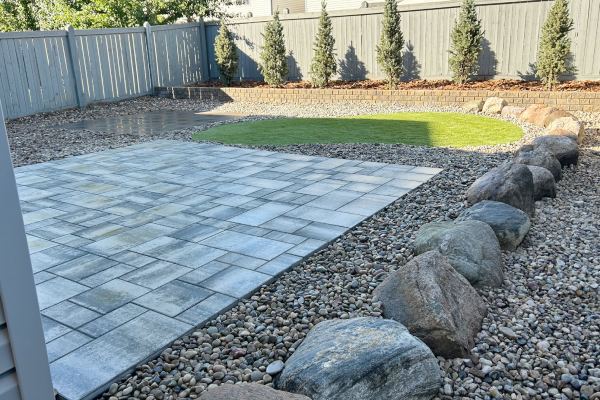
That doesn’t necessarily mean removing grass completely. Instead, many homeowners create a balance by combining:
Smaller lawn sections
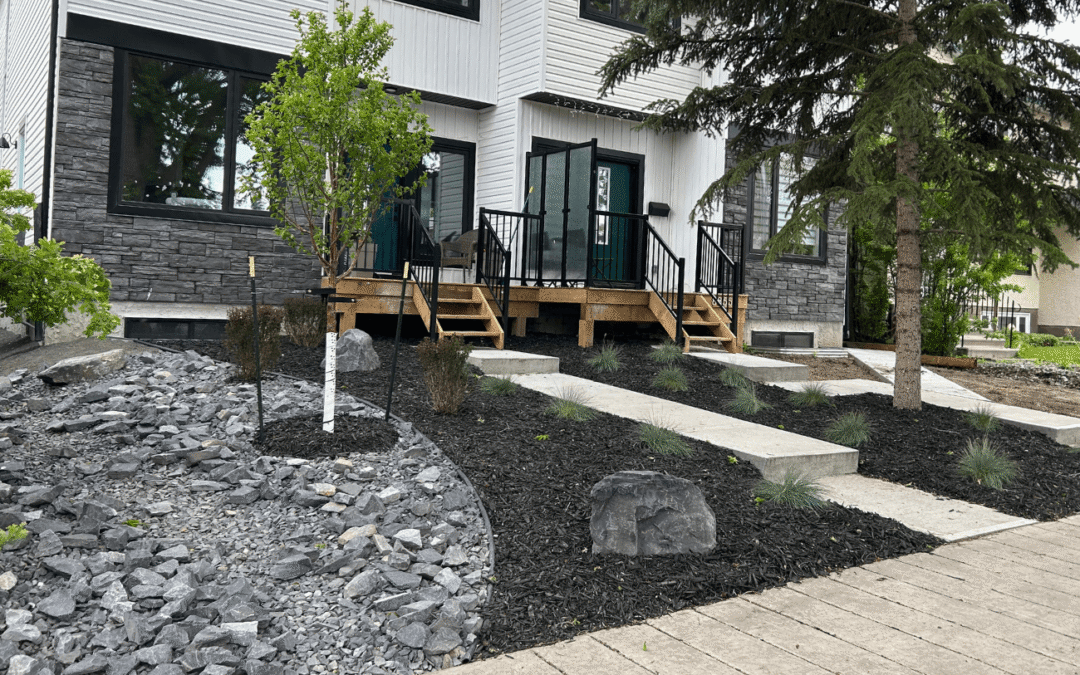
Decorative rock or mulch areas
Hardscaping features
Defined planting spaces
The result is usually a cleaner, more manageable yard without sacrificing curb appeal.
Durable Materials Help Reduce Long-Term Work
Low-maintenance landscaping often relies more heavily on durable materials that hold up over time.
Features like:
Patios
Walkways
Decorative edging
Rock beds
…help reduce the amount of weekly maintenance required while improving how the yard functions.
When installed properly, hardscaping features also tend to last significantly longer than constantly replacing struggling lawn areas or reworking planting beds every season.
The key is designing these elements to feel cohesive rather than overly hard or sterile.
Plant Selection Matters More Than Homeowners Realize
One of the biggest mistakes homeowners make is choosing plants based only on appearance.
In Edmonton, certain plants simply perform better than others.
Low-maintenance landscaping often focuses on:
Hardy plant varieties
Drought-tolerant options
Plants suited to local conditions
Lower-pruning species
Choosing plants that naturally thrive in Alberta’s climate reduces:
Watering requirements
Seasonal replacement
Ongoing maintenance demands
A well-planned planting strategy often makes a bigger difference than homeowners expect.
Simple Layouts Often Age Better
Another reason low-maintenance landscaping has become so popular is because simpler designs tend to hold up better over time.
Highly detailed landscaping with:
Too many planting areas
Complex shapes
Excessive edging
Overcrowded features
…often becomes difficult to maintain and starts looking messy if upkeep falls behind.
Cleaner layouts with defined spaces tend to feel more timeless while requiring less effort to keep looking polished.
This is especially important for homeowners who want their yard to still look great years down the road.
Low-Maintenance Doesn’t Mean Boring
One common misconception is that lower-maintenance landscaping means sacrificing beauty or ending up with a yard that feels plain.
In reality, many of the best-designed landscapes balance:
Texture
Materials
Plant variety
Functional gathering spaces
The goal is creating a yard that feels intentional and attractive without relying on constant maintenance to keep it looking good.
Thoughtful planning makes a huge difference here. Even simple design choices can create a space that feels elevated while staying practical long-term.
A Better Yard Should Require Less Work, Not More
Ultimately, the popularity of low-maintenance landscaping comes down to lifestyle.
Most homeowners want:
Less maintenance
More usability
Better durability
Outdoor spaces they actually enjoy spending time in
Instead of constantly repairing, mowing, or managing problem areas, a properly planned yard should make life easier.
If you’re looking for ways to simplify your outdoor space, exploring low-maintenance yard solutions can help you create a landscape that works better for your property, your schedule, and Edmonton’s climate.
And if you’d like help planning a lower-maintenance outdoor space, feel free to reach out to our team to discuss your landscaping goals.
Designing a backyard isn’t just about making it look good. The best outdoor spaces are built around how you actually use them, while still holding up to Edmonton’s changing seasons.
Whether you’re starting from scratch or upgrading an existing yard, the right ideas can turn an underused space into something functional, comfortable, and easy to maintain.
Here are some of the most effective backyard landscaping ideas for Edmonton homes.
Start With a Clear Layout
Before choosing materials or features, it’s important to think about how your yard is organized.
A strong layout:
Defines different areas of the yard
Improves flow between spaces
Makes the yard feel more intentional and usable
For example, separating a seating area from planting beds or lawn space can make everything feel more structured.
Most successful projects begin with a plan through landscape design, where the layout is mapped out before construction begins.
Create a Functional Patio Space
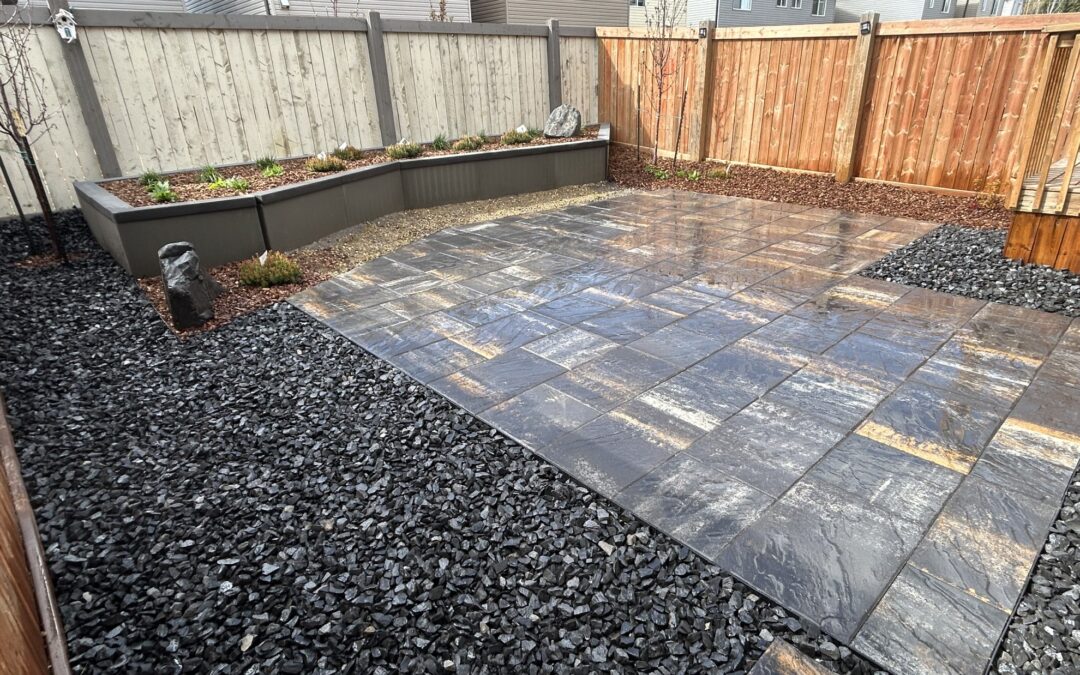
A patio is often the centerpiece of a backyard. It provides a place to relax, entertain, and spend time outside without worrying about mud or uneven ground.
Popular options include:
Interlocking pavers
Natural stone
Concrete slabs
The key is building it on a proper base so it stays level through freeze–thaw cycles.
A well-designed patio should feel like a natural extension of your home, not just an add-on.
Use Walkways to Connect the Space
Walkways do more than just guide movement. They help tie the entire yard together.
They can:
Connect patios to other areas of the yard
Improve accessibility
Add visual structure
Simple, clean walkway designs often work best, especially when they match the materials used in other parts of the yard.
Incorporate Low-Maintenance Features
Many homeowners want a yard that looks great without requiring constant upkeep.
Low-maintenance ideas include:
Rock or mulch beds instead of large lawn areas
Hardy plants suited to local conditions
Defined planting areas that reduce weed growth
These types of upgrades can significantly reduce the time spent maintaining your yard while still keeping it visually appealing.
Add Structure With Retaining Walls
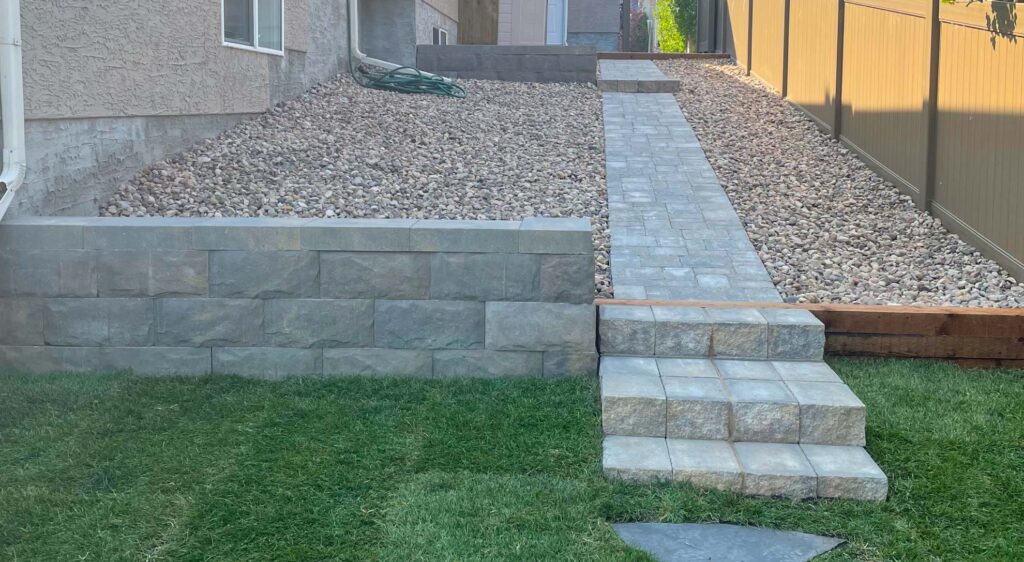
If your yard has elevation changes, retaining walls can help create usable, level areas.
They also:
Prevent erosion
Define planting beds
Add visual depth
Even in relatively flat yards, low retaining walls can be used to frame different sections and give the space more structure.
Layer Lighting for Function and Atmosphere
Outdoor lighting is often overlooked, but it makes a big difference.
It can:
Improve safety along walkways
Highlight key features
Extend the usability of your yard into the evening
Simple lighting placed along paths or around seating areas can completely change how the space feels at night.
Design for How You Actually Use the Space
One of the most common mistakes homeowners make is focusing only on appearance.
Instead, think about:
Do you want space for entertaining?
Do you need room for kids or pets?
Are you trying to reduce maintenance?
The best backyard designs are built around your lifestyle, not just a visual concept.
This is where working through a proper landscape design process makes a big difference. It ensures everything is planned with both function and appearance in mind.
Plan for Long-Term Durability
Edmonton’s climate can be tough on outdoor spaces, so durability matters.
Choosing the right materials and installation methods helps prevent:
Shifting surfaces
Drainage issues
Premature wear
A well-built yard should look just as good years from now as it does when it’s first completed.
Bring It All Together With a Cohesive Design
The best backyards don’t rely on a single feature. They combine multiple elements into a cohesive space.
That might include:
A patio for seating
Walkways for movement
Planting areas for softness
Structural elements for definition
When everything is planned together, the result feels intentional and complete.
If you’re considering upgrading your space, starting with a plan through landscape design can help you visualize the full picture before any work begins.
Turn Your Backyard Into a Space You’ll Actually Use
A well-designed backyard should feel like an extension of your home. It should be a place you want to spend time in, not something you constantly need to maintain or fix.
If you’re planning a yard upgrade, choosing the right company is just as important as the project itself. There are a lot of options when it comes to landscaping in Edmonton, but not all companies approach projects the same way.
The difference between a smooth, well-built project and a frustrating experience often comes down to who you hire.
Here’s how to choose a landscaping company that will get it right the first time.
Look for Experience With Edmonton Conditions
Landscaping in Edmonton isn’t the same as other regions. Between clay-heavy soil, freeze–thaw cycles, and seasonal weather swings, your yard needs to be built to handle local conditions.
A company with real experience in Edmonton will understand:
How to properly prepare a base for patios and walkways
How grading affects drainage after snow melt and heavy rain
Which materials hold up best over time
This isn’t just about appearance. It’s about long-term durability.
Make Sure They Offer a Clear Plan
A good landscaping company won’t jump straight into construction. They’ll start with a plan.
This usually includes:
Understanding how you want to use your space
Creating a layout that improves flow and function
Providing a clear scope of work and expectations
Many homeowners start with landscape design to map everything out before building. This avoids costly changes later and ensures the final result feels cohesive.
Review Their Past Work
Before hiring anyone, take a close look at their previous projects.
Look for:
Real photos of completed work
Projects similar to what you want
Consistency in quality
This gives you a realistic idea of what they can deliver.
If a company can’t show examples of patios, walkways, or full yard builds, that’s usually a red flag.
Understand What’s Included in the Work
Not all quotes are created equal.
Some companies may offer a lower price, but leave out key steps like:
Proper excavation
Base preparation
Finishing details
This often leads to issues like shifting surfaces or drainage problems down the line.
When comparing options, make sure you understand what’s actually included, especially for projects like patio construction or retaining walls, where proper installation is critical.
Look for a Focus on Both Function and Appearance
A good landscape should do more than just look nice. It should work for how you use your space.
That means:
Creating usable areas for relaxing or entertaining
Improving flow between different parts of the yard
Reducing maintenance where possible
Some homeowners prioritize appearance first, but long-term satisfaction usually comes from a balance of both.
If your yard isn’t currently working for you, it may be worth exploring a full yard restoration instead of smaller, disconnected upgrades.
Ask the Right Questions
Before committing to a company, ask a few key questions:
How do you handle drainage and grading?
What does your installation process look like?
How do you ensure long-term durability?
Can you walk me through similar projects you’ve completed?
Clear, confident answers are a good sign that the company knows what they’re doing.
Avoid Common Red Flags
There are a few warning signs to watch out for:
Vague or incomplete quotes
No clear process or timeline
Lack of real project examples
Pricing that seems too good to be true
Cutting corners during installation often leads to expensive fixes later.
Think Long-Term, Not Just Upfront Cost
It’s tempting to choose the lowest quote, but landscaping is one area where quality matters.
A properly built yard:
Lasts longer
Requires less maintenance
Avoids costly repairs
Investing in the right company upfront usually saves money over time.
Start With a Company That Understands Your Goals
At the end of the day, the right company should understand:
What you want your yard to look like
How you plan to use it
What your budget allows
From there, they should guide you toward a solution that works for your space and Edmonton’s conditions.
And when you’re ready to move forward, working with a landscaping company in Edmonton that focuses on both design and construction can help you create a yard that looks great and performs long-term.
If you’re dealing with issues in your yard, you’re not alone. Many homeowners run into the same problems when it comes to landscaping in Edmonton, and most of them come down to a combination of soil conditions, weather, and how the yard was originally built.
The good news is that these problems are predictable and fixable when approached the right way.
Here are the most common landscaping challenges in Edmonton and what you can do about them.
What are common landscaping problems in Edmonton yards?
Common landscaping problems in Edmonton include poor drainage, uneven yards, shifting patios, high maintenance designs, and erosion. These issues are often caused by clay soil, weather conditions, and improper initial construction.
Poor Drainage and Standing Water
One of the most common issues homeowners face is water pooling in certain areas of the yard, especially after heavy rain or snow melt.
This is usually caused by:
Improper grading
Clay-heavy soil that drains slowly
Low spots in the yard
Over time, standing water can damage grass, create muddy areas, and even affect nearby structures.
The solution starts with correcting the slope of your yard and ensuring water is directed away from your home. In many cases, this is part of a larger yard restoration that addresses both function and appearance.
Uneven or Sloped Yards
Many properties in Edmonton aren’t perfectly level, which can make parts of the yard difficult to use.
This can lead to:
Limited usable space
Erosion over time
Difficulty installing patios or walkways
Retaining walls are often used to create level areas and add structure to the yard.
If you’re dealing with elevation changes, retaining wall construction can help turn a difficult space into something functional and visually appealing.
Shifting Patios and Walkways
Freeze–thaw cycles are a major factor in Edmonton. As the ground expands and contracts, poorly built surfaces can shift over time.
Signs of this include:
Uneven pavers
Gaps forming between stones
Sunken or raised sections
This usually happens when the base underneath wasn’t properly prepared.
A properly installed surface requires excavation, compaction, and the right base materials. If you’re planning to upgrade, investing in quality patio construction or walkway installation prevents these issues long-term.
High-Maintenance Yards
Many homeowners find themselves spending more time maintaining their yard than actually enjoying it.
Common frustrations include:
Constant mowing and trimming
Weeds taking over garden beds
Plants that struggle to survive
This often comes down to design choices that don’t match Edmonton’s conditions or the homeowner’s lifestyle.
Switching to a more practical layout with durable materials and hardy plants can significantly reduce maintenance. Many homeowners opt for low maintenance yard solutions that still look great without the constant upkeep.
New Build Yard Challenges
Newer homes often come with unfinished or poorly graded yards.
Typical issues include:
Bare soil or uneven ground
Drainage problems from the start
Lack of structure or usable space
These properties usually benefit from a full landscaping plan rather than small, isolated fixes.
A complete approach through landscape design ensures everything works together from the beginning.
Erosion and Soil Movement
Over time, water and weather can wear away parts of your yard, especially in sloped areas.
This can result in:
Soil washing away after rain
Exposed roots or uneven surfaces
Damage to planting areas
Erosion is often tied to drainage and grading issues, so addressing the root cause is key.
In many cases, combining proper grading with structural elements like retaining walls provides a long-term solution.
Poor Layout and Underused Space
Sometimes the issue isn’t damage or failure, it’s that the yard just doesn’t feel usable.
This can look like:
Large areas of unused lawn
No clear flow between spaces
Lack of defined seating or gathering areas
A well-planned layout can completely change how a yard functions.
Many homeowners start with a plan for landscaping in Edmonton that focuses on both usability and appearance, then build out features like patios, walkways, and planting areas accordingly.
Choosing the Right Solution for Your Yard
Every yard is different, and most problems are connected in some way.
For example:
Drainage issues often tie into grading
Uneven yards may require structural solutions
High maintenance can be solved through better design
The key is looking at your yard as a whole instead of trying to fix one issue at a time.
If you’re dealing with multiple challenges, working with a landscaping company in Edmonton can help you create a plan that solves the underlying problems and improves the overall look of your space.
If you’re planning landscaping in Edmonton, one of the first questions is always the same: how much is this actually going to cost?
The honest answer is that it depends on the size of your yard, the type of work you’re doing, and how much construction is involved. A simple refresh will look very different from a full yard rebuild.
This guide breaks down realistic pricing ranges so you can plan your project with confidence.
How much does landscaping cost in Edmonton?
Landscaping in Edmonton typically costs between $2,000 and $80,000+, depending on the size of the yard, materials used, and project complexity. Smaller upgrades cost less, while full yard transformations with patios, grading, and planting fall on the higher end.
Average Landscaping Costs in Edmonton
For most homeowners in Edmonton, landscaping projects fall into a few general ranges:
Basic upgrades: $2,000 – $8,000
Mid-range projects: $8,000 – $25,000
Full yard transformations: $25,000 – $80,000+
These ranges vary depending on materials, design complexity, and how much groundwork is required.
If you’re still early in the process, it helps to understand how landscaping in Edmonton projects are typically planned before diving into specific numbers (link to previous article).
Cost by Project Type
Most landscaping projects are made up of multiple elements. Here’s what you can expect based on common upgrades.
Patio Construction
$5,000 – $20,000+
Depends on size, material (pavers vs stone), and base prep
A properly built patio isn’t just surface-level. It requires excavation and a solid base to handle Edmonton’s freeze–thaw cycles.
If you’re considering this type of upgrade, learn more about patio construction and how different materials impact cost.
Walkways and Pathways
$2,000 – $10,000
Influenced by length, material, and layout complexity
Walkways improve both function and curb appeal, especially when connecting different areas of your yard.
Retaining Walls
$5,000 – $25,000+
Higher costs for larger walls or structural support
Retaining walls are often necessary for grading and leveling, especially in yards with slopes or drainage issues.
If your yard is unfinished or not functioning properly, a full rebuild often provides better long-term value than piecemeal fixes.
You can learn more about yard restoration and what’s involved in starting from scratch.
Planting and Softscaping
$2,000 – $15,000
Costs vary based on:
Plant selection
Quantity
Soil preparation
Choosing plants suited to Edmonton’s climate can reduce long-term maintenance and replacement costs.
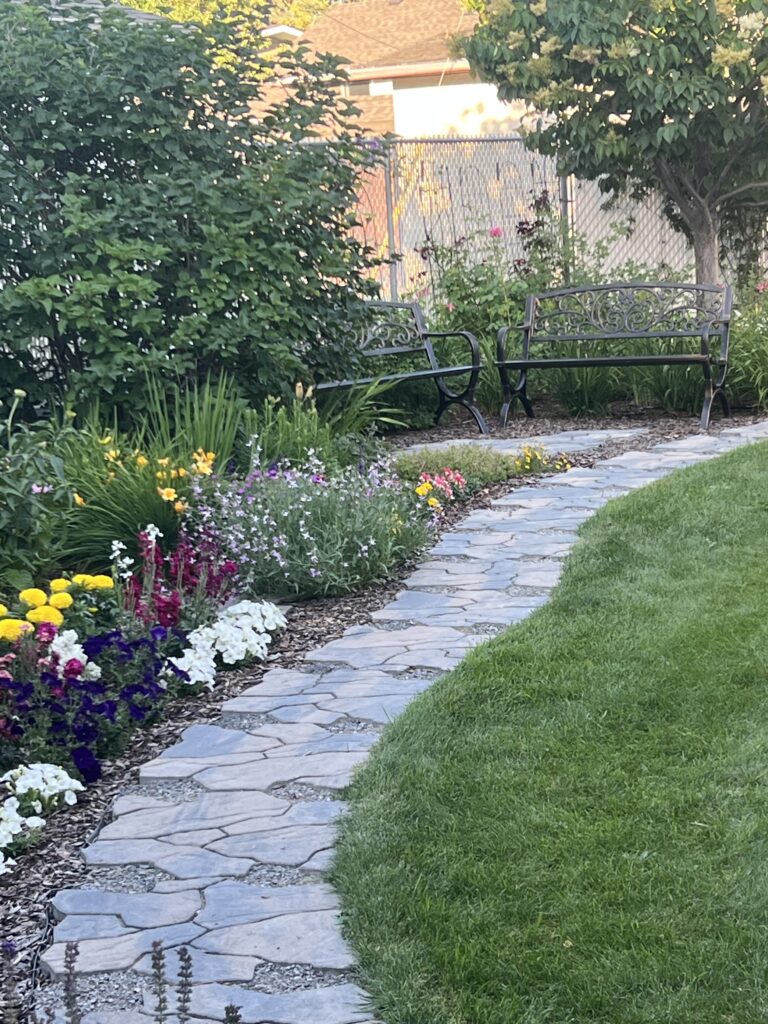
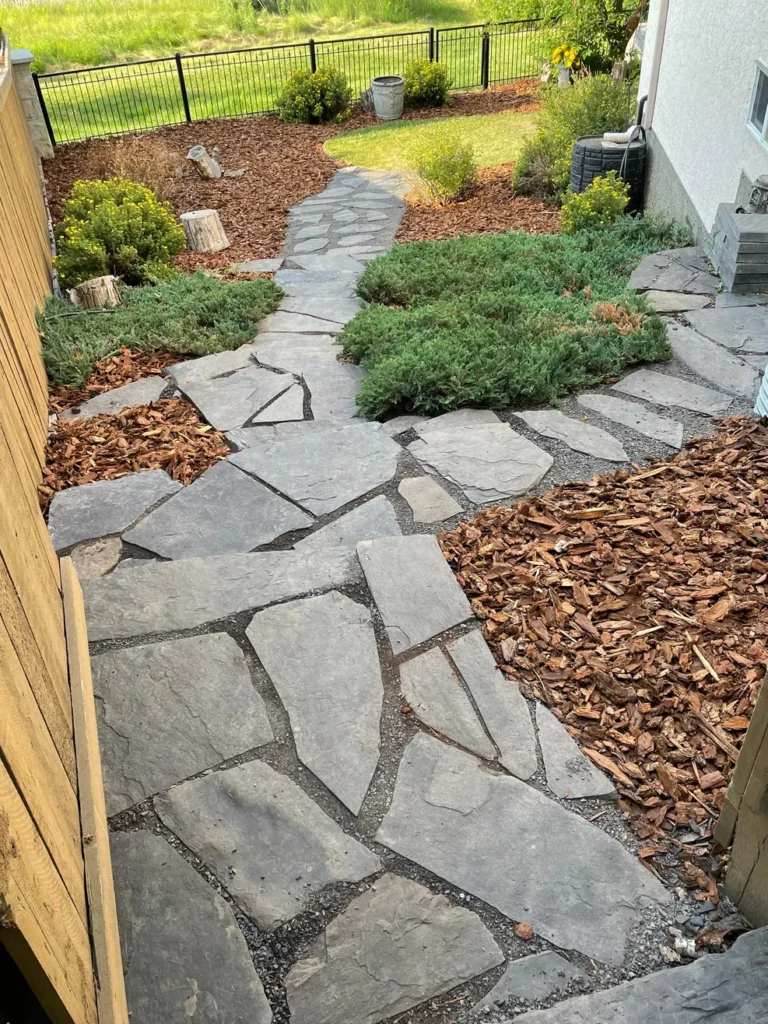
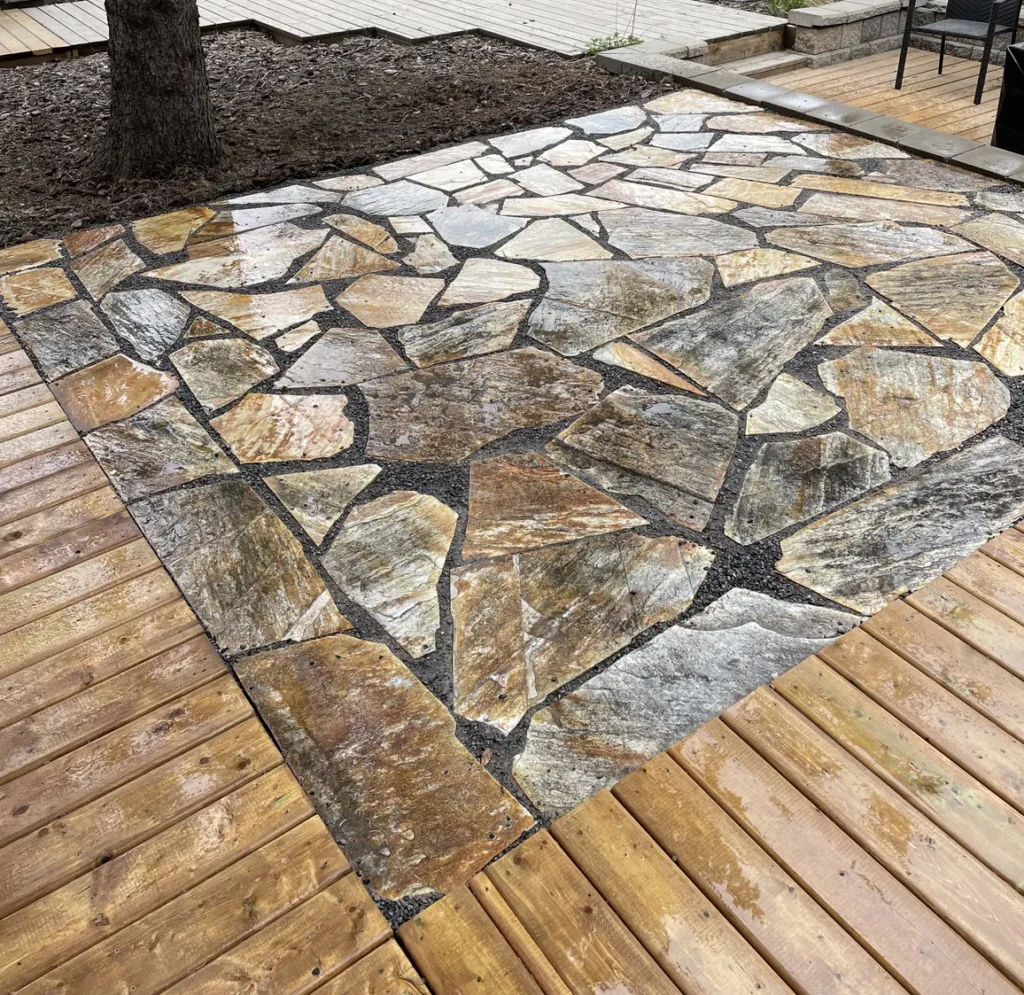
Beautiful rock garden with stone walkway
What Impacts Landscaping Costs the Most
Two projects with the same size yard can have completely different costs depending on a few key factors:
1. Site Preparation
If your yard requires:
Excavation
Grading
Removal of existing materials
Costs will increase due to labor and equipment.
2. Material Selection
Basic pavers vs premium stone
Standard vs custom features
Material choice has a major impact on both cost and long-term durability.
3. Project Complexity
Straightforward layouts cost less than:
Multi-level designs
Custom features
Tight access areas
4. Size of the Space
Larger yards require more:
Materials
Labor
Time
How to Budget for Landscaping in Edmonton
A good way to approach budgeting is to prioritize what matters most.
Ask yourself:
Do you want a full transformation or phased upgrades?
Which areas of your yard need the most improvement?
How important is long-term durability vs upfront cost?
Many homeowners choose to start with a plan through landscape design, then build in phases over time.
Ways to Save Without Cutting Corners
There are smart ways to manage costs without sacrificing quality:
Focus on high-impact areas first
Use a mix of materials instead of premium options everywhere
Plan the full layout, even if you build in stages
Choose low-maintenance solutions to reduce long-term upkeep
Trying to cut costs on base preparation or installation often leads to expensive fixes later.
Is Landscaping Worth the Investment?
For many homeowners, the value goes beyond just appearance.
A well-built yard can:
Increase property value
Improve usability and comfort
Reduce maintenance over time
Prevent future issues with grading or structure
If you’re planning landscaping in Edmonton, investing in proper design and construction upfront usually leads to better long-term results.
Get a Clear Plan Before You Start
Every yard is different, and the best way to understand your exact cost is to look at your space, your goals, and what’s realistically possible.
If you’re ready to move forward, working with a landscaping company in Edmonton can help you create a plan that fits your budget and avoids costly surprises.